At the 107th ARTCaffè, Parker McComb traced his journey from New York to Seoul and the evolution of his multidisciplinary practice. Centered on empathy,vulnerability, and intuition, McComb reflected on how personal upheaval, migration, and community invitations shaped his work. Through photographs, found objects, and installations, he explored cycles of life, memory, belonging, and transformation. Emphasizing the power of rest, persistence, and trust in one’s instincts, he highlighted how meaning often emerges after creation. Ultimately, McComb framed his artistic path as a series of invitations—moments of connection that create ripple effects across relationships, spaces, and creative lives.
Below is a recap of The Talk.
***
Parker McComb: I moved here from New York City in 2018, and I just celebrated my eighth anniversary of living in Seoul, Korea.
The first question I usually get, after a conversation, is: how did you end up in Seoul?
I have a lot of friends from Parsons, where I graduated, and many of them moved back here to Korea. I was very influenced by them, and when I came here, it felt very familiar.
At first, I was just visiting friends, but then I began freelancing, testing whether I could actually live here.
I had been in a long-term relationship back in New York, so I was kind of juggling both. After a few months here, I returned to New York to nurture that relationship, but in the end, I got dumped.
My life just blew up in front of me. That experience really pushed me forward, and I decided to move to Korea. It turned out to be the best decision.
The silver lining is that I’m able to sit here and talk to all of you right now and share my practice. That’s how I look at life, and how I found my way back to my practice as an artist. I definitely had abandoned it for a few years after college, and the breakup became the catalyst that drove me forward—coming here and rededicating myself to what I believe my purpose is.
I titled this artist talk Empathesis because I like to invent words by combining others, and I think a lot of my work is about empathy. All of my work ties back to relationships and empathy.
This is my thesis on empathy.
Sometimes, I feel like I didn’t truly practice empathy until I got dumped. That experience made me a little more selfless, and I’m really grateful for it.
Living in a new country really shapes you and informs you, and that’s what has happened to me here.

During the first three years, from when I landed in 2018 until around this time in 2021, I met a lot of people. I went out constantly and didn’t decline any invitations. I was very social—I basically became an extrovert, which I’m not, to be honest.
I had a great time, and really enjoyed myself. I shot and made work here and there, but I didn’t fully lock in until this show came about.
A friend from Parsons had a café in Hongdae, and I stopped by one day. Even three years later, I was still going through the breakup, picking up the pieces of myself and trying to put them back together. She understood that, and I feel like she understands darkness in the same way that I do.
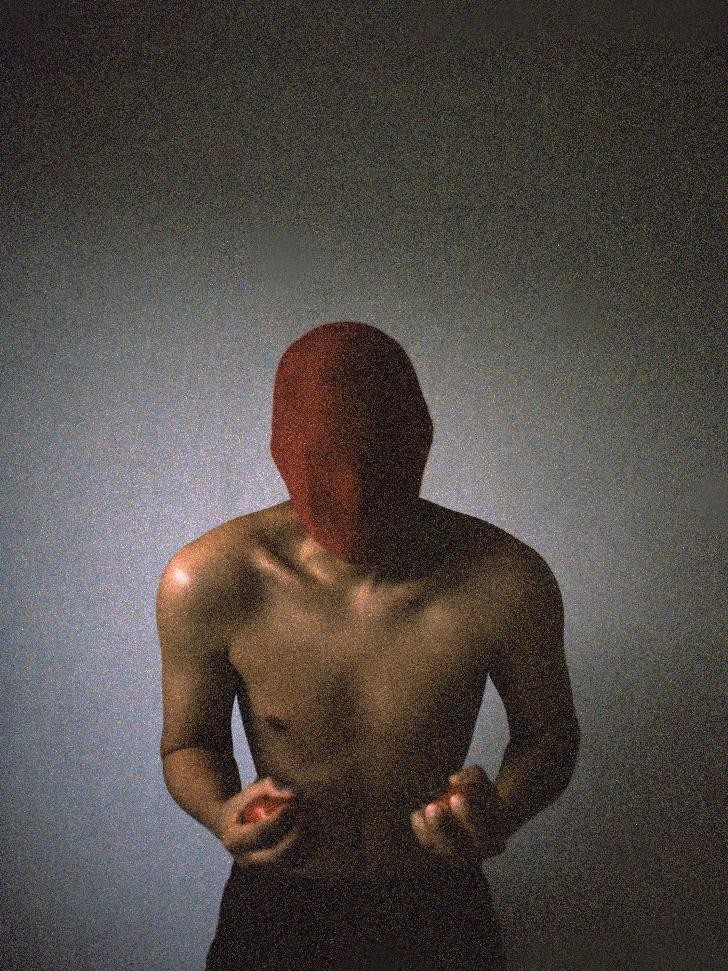
This was my first invitation to do a show in Korea. It was called Facing: Identities, and it was the first time I showed my mask series.
It gave me the opportunity to make work and process my emotions—moving to a new country, my identity as a queer person, and becoming comfortable with myself.
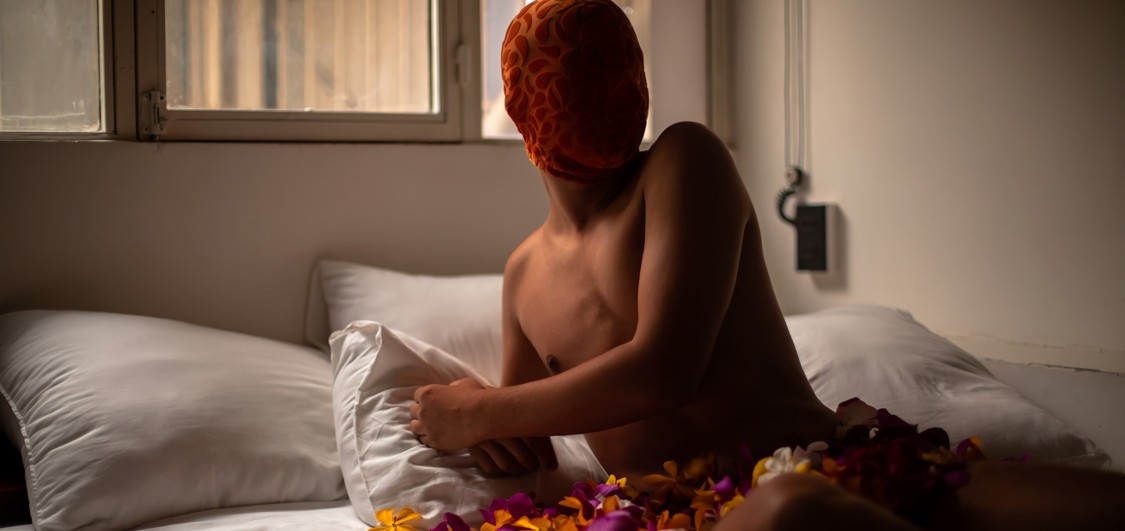
I don’t usually call these self-portraits, but they are, because I use my own body as a vessel to create the work. Still, I feel that including my face would be a little egotistical and also too vulnerable for me. The mask works as a catalyst for hiding—revealing one’s identity by concealing it.
I think there’s so much more to us than just our faces. Once we erase the face and make it void, it becomes about the other parts of the environment surrounding you—what defines you and expresses who you are.
I like to have a goal in mind. I enjoy working toward something and then sharing it with people. All of these photos were made specifically for that show. Because I was invited and knew I had a space to exhibit, that’s when I truly started making work with intention.
The first image, with the flower, is called Wild Flower. There’s a Korean artist, Park Hyo Shin, who sings a ballad about a flower that you have to let go in order for it to return to you. The lyrics really spoke to me and made me realize that I needed to let go of this person. That piece became my way of letting go.
The second photo shows me squashing tomatoes, because I carried a lot of resentment. I also don’t like tomatoes. I have a strange relationship with them—I like tomato sauce and pizza, but not tomatoes themselves.
Red feels like a very powerful color, and this was how I expressed my resentment—through something symbolic, without directing that anger at a person.
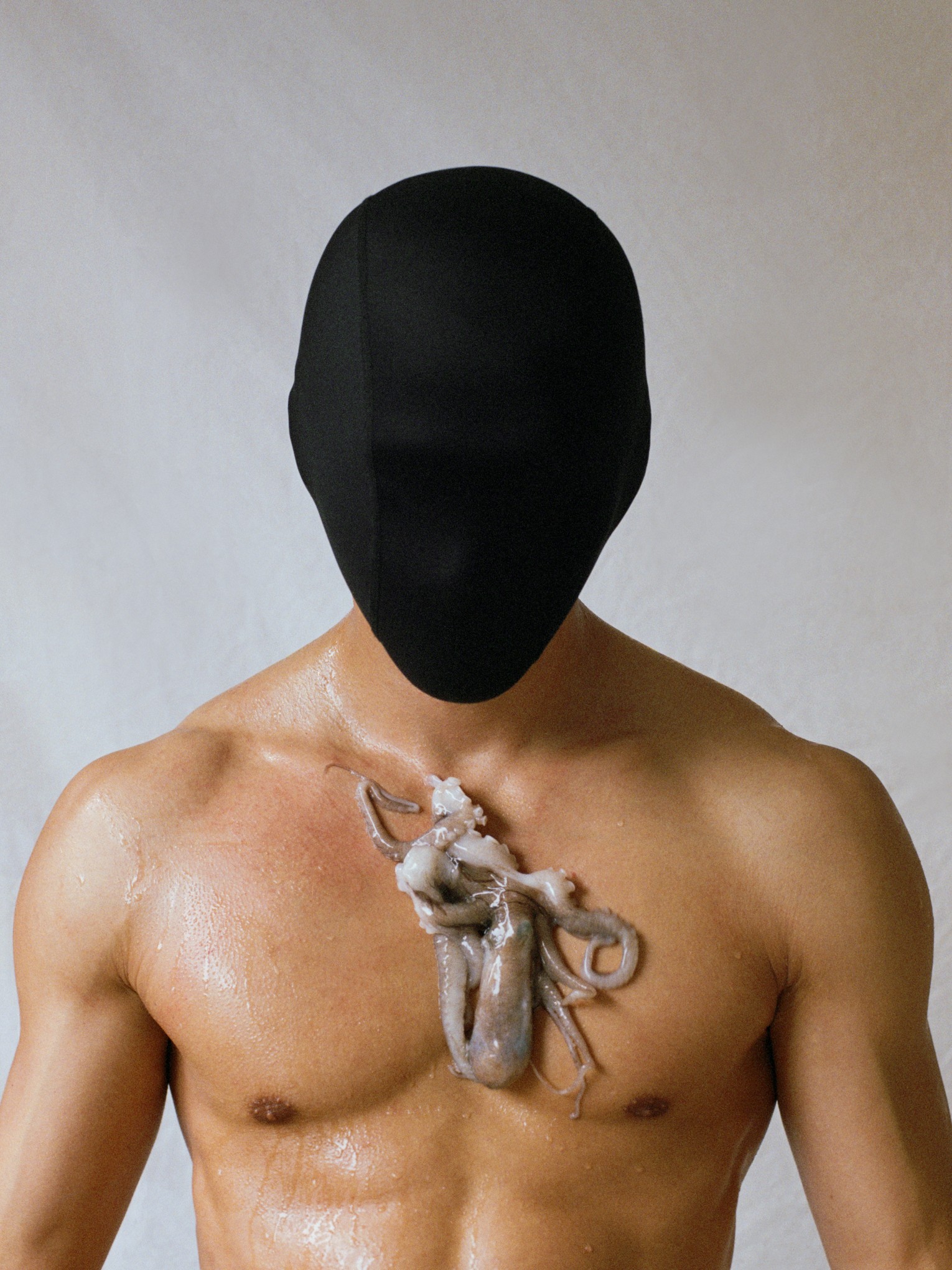
The third photo is called Ego, and to me it’s the strongest photograph I made in 2021. I think the ego is something that can outsmart us. There’s an octopus in the chest—the octopus is such an intelligent, shape-shifting creature, and I relate to that because I feel like I’m constantly shape-shifting to exist in thisworld.
Ego often gets a bad reputation, with such negative connotations. But there’s also duality—it exists to protect you. It isn’t only negative.
The fourth photo is called Regardless, and many of these works are based on songs. I’m always listening to music—whether it’s the lyrics, melody, or sound.
Regardless expresses the idea: I’ll have your back. But just because someone doesn’t have yours doesn’t mean you have to abandon them. That’s the message I was trying to convey.
Veil is about camouflage. I come from a fashion background in New York—a very intense industry. I learned a lot from it, but I don’t think it’s ultimately for me.
This photo is an homage to blending into certain situations in order to protect yourself and get by. In a way, it’s also an homage to fashion.
In 2019, I went to Los Angeles, and a friend of mine was pregnant. For some reason, I felt drawn to photograph her.
When you give birth—when you bear a child—you’re not only bringing new life into the world, but making enormous sacrifices. It’s something I can never experience, and I deeply respect it. I have so much appreciation for women—for my mothers (biological and step-mother) and my four sisters—and I wanted to pay tribute to them.
I believe there’s a rebirth that happens within the person who gives life, and I created this as a sub-series within the mask series.
I feel that the mask series will never end for me. It’s like my lifelong series, with sub-series living inside it.
I work a lot through intuition. I don’t always question or fully understand what the work is about at the moment I create it. I let the work lead itself first, and understanding often comes later.
It’s about trusting your subconscious and following it.
I take many of these images in bed. I have a lot of anxiety, and the bed is a ritual sanctuary for me, a place to rest, recover, and recharge my energy and my social battery. Even if it’s just staring at the wall, I need that time for myself. These works are a way of honoring that ritual.
Floor Gallery is a beautiful space. I found them on Instagram when they were hosting open calls, and I began applying. They were very receptive to my work.
I’ve participated in multiple group exhibitions with them—not solo shows, but group exhibitions.
Places Belong is very different from my mask series. It reflects my ongoing relationship with Floor and my appreciation for their support over the years.
I’m glad I had the chance to show work outside of what I usually push—which is the mask series. I think this also reflects my surrealistic approach to making work.
People believed in my work before I believed in it myself. Now I do. Maybe now I’m even too confident. But I believe in myself because others believed in me first.
I think that’s incredibly important—to surround yourself with people like that. I used to think I could do everything myself, but that’s absolutely not true. I’ve learned to let people help me, instead of believing I have to do it all on my own.
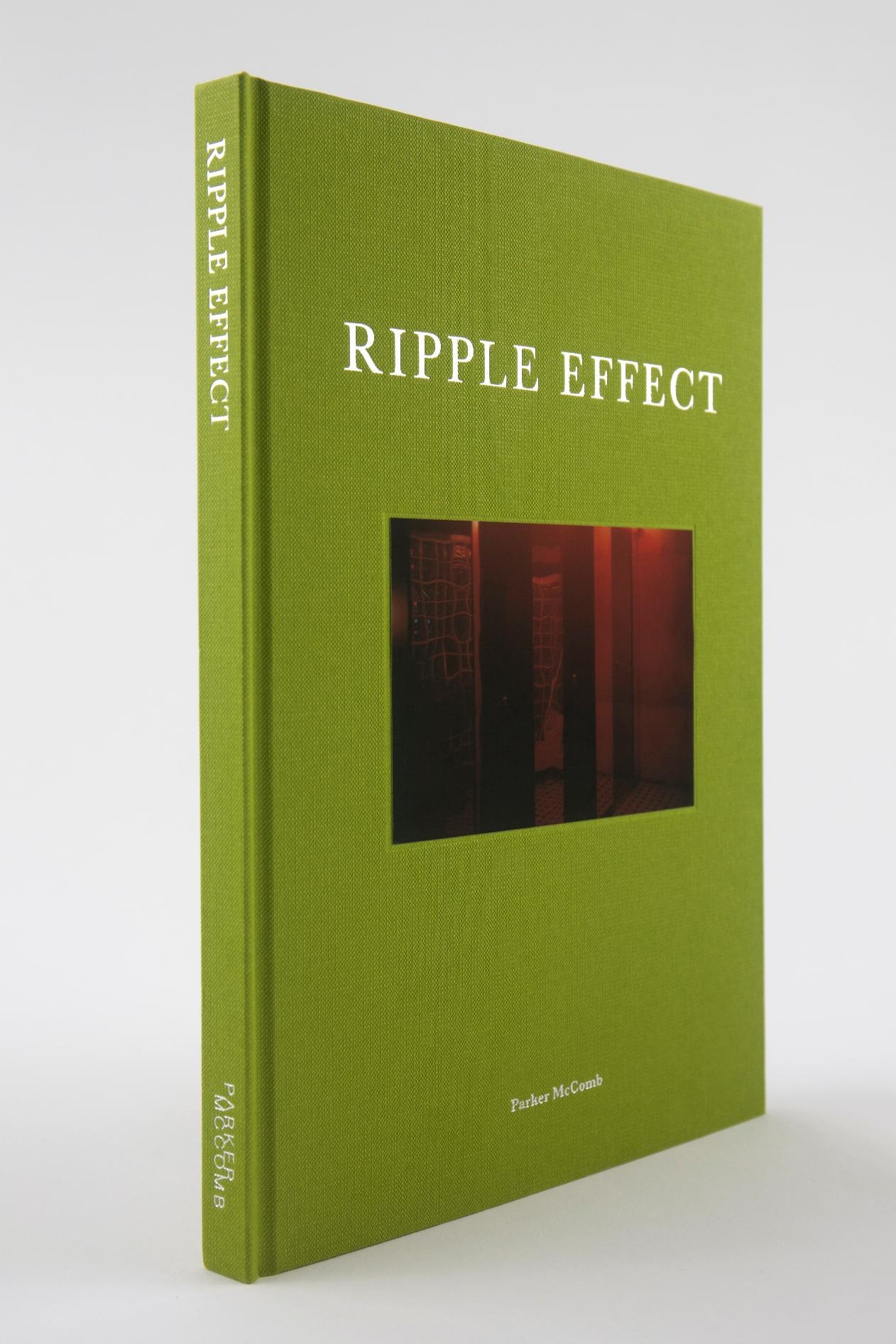
I self-published Ripple Effect with my best friend, Annie Kim, of Default Mode.
Later, I had the opportunity to show this publication at their space during a themed book exhibition. I’ve participated in many book fairs with them, and they’ve consistently included me and invited me to take part. This really goes back to the idea of invitations.
I think being invited is an act of empathy, and that’s something important to recognize.
This publication is a love letter to anyone who feels lost or uncertain about their direction. At that time, I was at a turning point in my life, and the publication became a kind of release for me—like saying, “Okay, I know my direction now. I just need to move forward.”
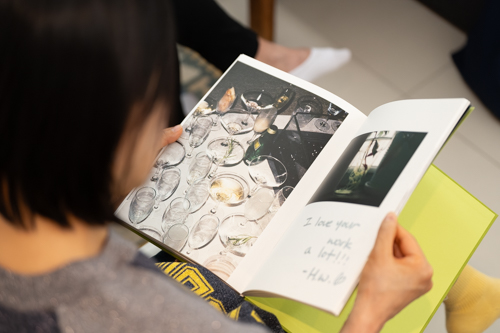
There are 110 images in this book, spanning 19 years of work—from when I was as young as 15 years old, in middle school, all the way to 2023. There are Polaroids, and all of the images are shot on film.
I’ve been taking photographs since I was about 14 or 15, in high school, using a Canon A-1 along with digital cameras. At the time, I was a bit of a purist who believed, “It’s not photography unless it’s film photography.”
Since then, I’ve let go of that mindset, and now I work with both film and digital imagery.
Color was very important to me in this project. That specific color brings me joy, and simply looking at it brightens my mood—that’s why I chose it. There wasn’t any complicated reasoning behind it.
The project felt like a way of saying, “Okay, let’s move on from everything I’ve experienced and step into the next phase.”
It also felt like an invitation to myself—supporting whatever would come next, finding my direction, and trusting myself again.
There aren’t many people in this book. It mostly features objects—still-life scenes—from different places around the world. After the book launch, I felt incredibly proud of the result.
I felt like I had truly accomplished something. I was especially proud because I created it with one of my closest friends. It turned out exactly the way both of us envisioned it.
The process was very collaborative, and it just felt right. But only weeks after releasing it, people started coming up to me and asking: “What’s next? What are you working on now?”
I remember thinking, Are you serious? I was so tired—completely exhausted and drained. I couldn’t just jump straight into the next thing.
To be honest, I often feel depressed after completing a major project. That’s when I retreat to my bed and stare at the wall for a long time—to regenerate and recover.
That’s just how my process works.
A few months later, I went to Paris during Art Basel. I visited friends there and saw a surrealist exhibition at a museum. It was incredibly inspiring and sparked something in me—igniting a direction I wanted to follow.
I told myself: I can’t keep feeling bad for myself. You need to pick yourself back up. Just go for it—one foot in front of the other—even if you can’t see what’s ahead.
I started exercising and running along the Han River, which is one of my favorite things to do here in Seoul. I would run to the flower market and gather whatever flowers spoke to me that day. Then I began visiting wet markets, picking upshells and food—especially eggs. Every day.
The crack of the egg sparked a fascination in me. Every crack is completely different. It felt like a reflection of the fragility of our humanness—of vulnerability.
Every morning, I would crack three or four eggs and spend time putting them back together. I became completely fascinated by them. They began to represent how I felt when I first came to Korea. You can put yourself back together, but the cracks will always remain.
This series came from simply putting one foot in front of the other. I created a framework formyself: run to the markets, collect whatever speaks to you, even if you don’t use it right away—save it. Build a shelf of materials to work from.
The entire series became about the cycle of life: birth, life, death, and decay. I became deeply interested in that cycle and what it represents. I didn’t realize it at the time, but it would eventually lead to the next show.
That show was called Liminal Paradise. The still-life works felt like surreal dreams. Valentina Buzzi helped curate the exhibition and supported the writing. She is also a deeply supportive friend who understands my work and can articulate it in ways that I cannot.
I don’t enjoy speaking or writing—I’m not naturally drawn to words. I communicate through visual language, and that’s what I trust most. I rely on the curators and friends around me to put my ideas into words when needed. I know my strengths, and I’m comfortable with that.
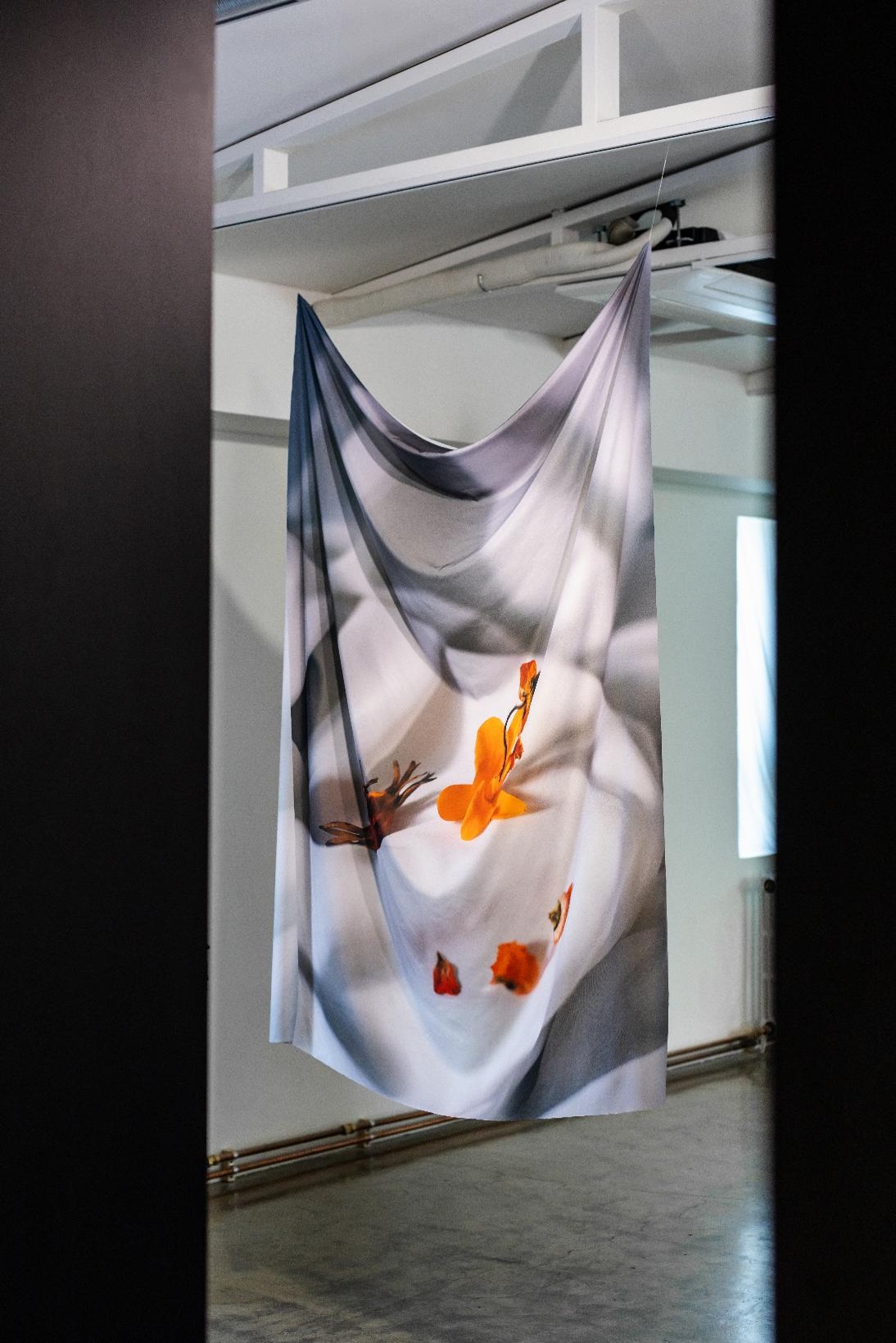
Valentina helped conceptualize the exhibition, including the idea of draping large-scale fabric pieces that were suspended throughout the space.
This exhibition took place at 131 Gallery. When I was invited to create a solo show there, I didn’t fully understand how large the undertaking would be. The space was much bigger than I had anticipated. It was an incredible experience, but also physically, emotionally, and psychologically intense.
While I was creating the series, the invitation arrived. That’s what I believe in—trusting the flow and trusting that making work will naturally lead to the next opportunity.
Up until that point, I had been using white canvases as backdrops for my still lifes. I wanted to mirror the draping seen in the photographs within the exhibition itself.
I love photography, but it is inherently two-dimensional. Even back at Parsons, during my thesis work, I was interested in creating three-dimensional objects—something more tangible, not just flat images on a wall. I wanted the work to exist differently, to feel fluid in space.
With Valentina’s help here in Seoul, this was the first time I truly pushed that idea forward and began to understand what the next evolution of my visual language could be.
Divination became one of the most successful pieces from the series.
When I photograph, I usually shoot in multiple formats—digital, film, and Polaroid—because I want to see all the different results. Each format creates a distinct feeling.
But this piece, shot digitally, felt the most impactful and powerful. People responded strongly to it, seeing different interpretations within it. To me, it carries a kind of heavenly presence.
For me, it’s important to continue making work—even when you don’t feel like it.
I remember the day this piece was created very clearly. I had gathered flowers, and they were already beginning to die in my apartment. Flowers don’t give you much time—you have to work quickly.
That day, I thought to myself, “I don’t want to do this. I don’t want to shoot. I’m tired. I’m exhausted.” I just wasn’t in the mood.
But I reminded myself: the materials are here. I hate wasting materials—that’s one of my biggest motivations. If I hadn’t created the image, the flowers would have gone to waste. So I pushed myself.
And the result turned out pretty good. I’m really proud of this piece, and the audience responded to it very strongly.
I feel lucky that I pushed myself that day. Sometimes you just have to remind yourself to keep going.
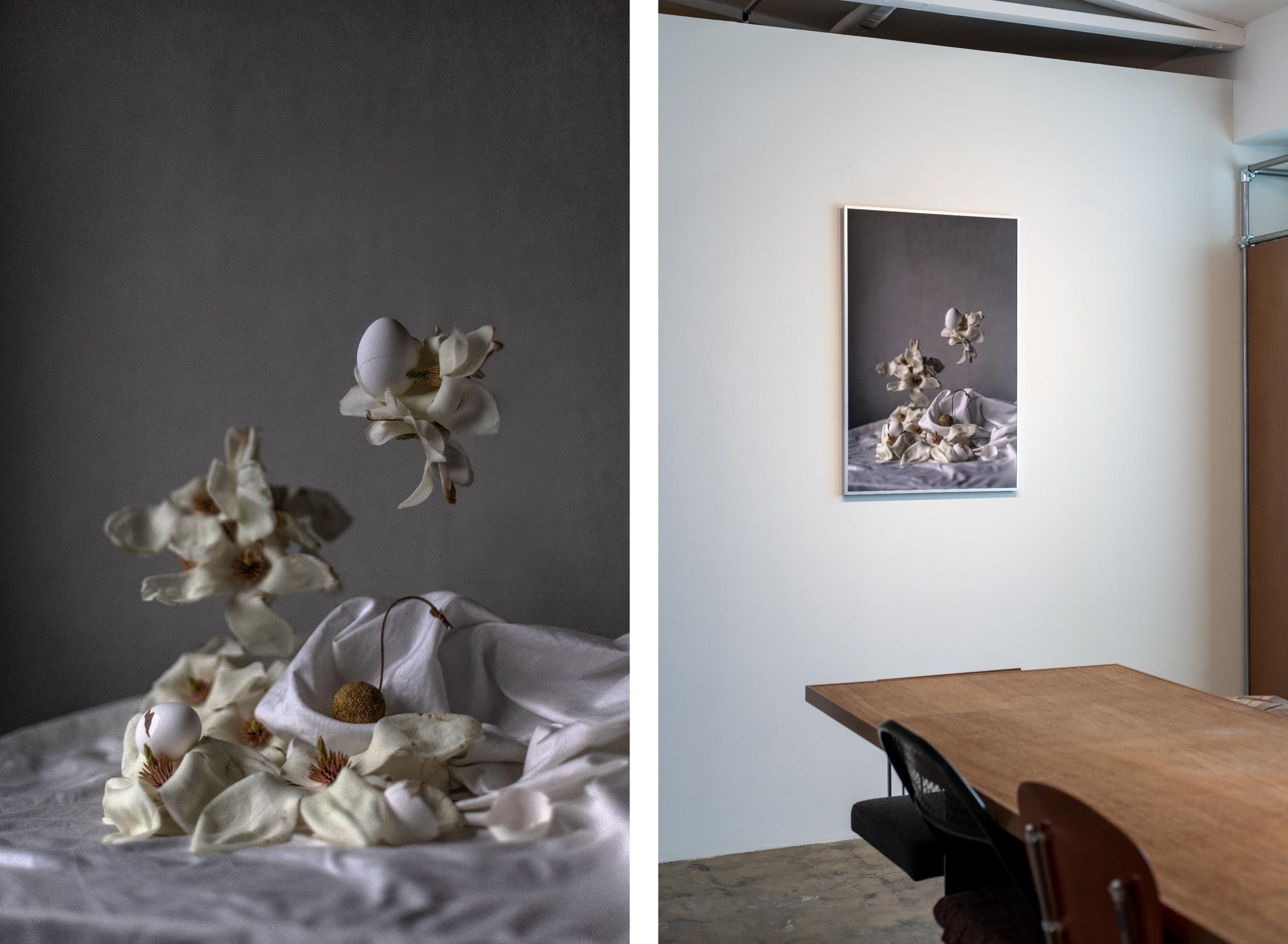
I buy materials, and sometimes they sit in my studio for a very long time. Because they’re organic, they decay in my space. That’s probably not the healthiest thing, but I love the beauty and honesty of life that this reveals.
Life isn’t always beautiful. Maybe I’m melancholic—but I’m drawn to darkness. I believe beauty and light shine brightest in dark spaces.
All of these images function as metaphors. They remind me that there is light at the end of the tunnel, and that every decision is meaningful. Even if the outcome isn’t what you expected, you are still learning and experiencing along the way—and I think that’s what life is about.
That mindset led me to create this work. As I mentioned before, I don’t always know what I’m saying while making work. I work intuitively, composing images first, and meaning finds me later.
Chest of Hidden Dreams was the first found object that truly captivated me. I wanted to bring new life and meaning into it. I live in a neighborhood called Bogwang-dong, and I’m actually moving out next week because the area will be demolished. People have been throwing away their belongings, sending so much to landfills.
This object sat outside my house for about a year. I became obsessed with its color. After a year, I thought: nobody has taken it—maybe it’s meant for me.
So I finally picked it up. I removed the back and inserted black acrylic to create stronger contrast and darkness. Then I placed a cracked egg, a decayed banana, and a chalice inside—broken, cracked, decaying objects. Essentially trash.
I find beauty in things that others dismiss. I think this reflects the cracks we carry in life—we keep moving forward despite them.
The object became like a subconscious chest. I’ve always had a fascination with chests and compartments. I like organizing things—emotions, works, series. This object became a container for that impulse.
The exhibition also included draped fabrics, which symbolized an ocean of emotions for me. I often think of water and the ocean as metaphors for emotional life.
Water is not fixed, and that reflects how emotions behave. You can’t control them completely. Circumstances can harden them, evaporate them, or bring them back again—like tides. That’s what the white fabric symbolizes.
With the white canvas, I was also referencing Dutch still-life painting traditions. Photography has always been debated as to whether it qualifies as fine art. As a photography teacher, I often begin my classes by explaining the difference between taking a photograph and making one.
That distinction helps me separate my client work from my personal work. When I create still-life images, I approach photography like painting—controlling every detail: the composition, lighting, and staging. The canvas backdrops directly reference painters’ canvases, and that connection supports my argument for photography as fine art.
When I began this still-life series, I didn’t attach heavy meaning to it. The works weren’t originally intended for an exhibition, and removing that pressure helped me trust my intuition.
Although the images reference Dutch still-life traditions, I wasn’t constantly researching them. Interestingly, when I studied at Parsons, I nearly failed art history both semesters. I’m not a textbook learner—and it was a 9 a.m. class, which didn’t help.
Now, I realize that those classes influenced me subconsciously. It’s like memory stored somewhere in the background, now emerging in my work—maybe fifteen years later.
This project marked my first step into working with found objects and reinterpreting them. The frames themselves were also found objects from my neighborhood. They had been sitting outside for months, weathered by snow, heat, rain, and cold.
I didn’t place them there—I simply collected them, brought them into my home, cleaned them, and inserted my images into them.
Using these existing frames gave them new life, allowing them to host my imagery. I find them beautiful because they carry history and lived experience. I wanted to preserve that sense of time and memory.
This was my first attempt at working this way, and I don’t think I had fully figured it out yet. But taking the risk—trying something unfamiliar—was important. This approach moved beyond straightforward photography into object-based work and reinterpretation.
Hyperconscious Lamp began as a photographic series, but I wanted the lamp itself to exist as an object in my home. I didn’t want to recreate exactly as it already
existed, so I used images from an abstract digital series taken in multiple locations.
I printed the images on fabric and drilled a hole into a bottle to transform it into a lamp. I didn’t assemble it myself—I worked with professionals, since I’m not an electrician. I’m somewhat handy, but not that handy. This piece became another step toward object-based work.
Hydrohalo, my latest exhibition, felt like a continuation of the previous one, but more refined and intentional. By this stage, I had been working with water imagery, shells, eggs, and organic materials for quite some time. This show focused specifically on water as asymbol—water as memory, protection, and healing.
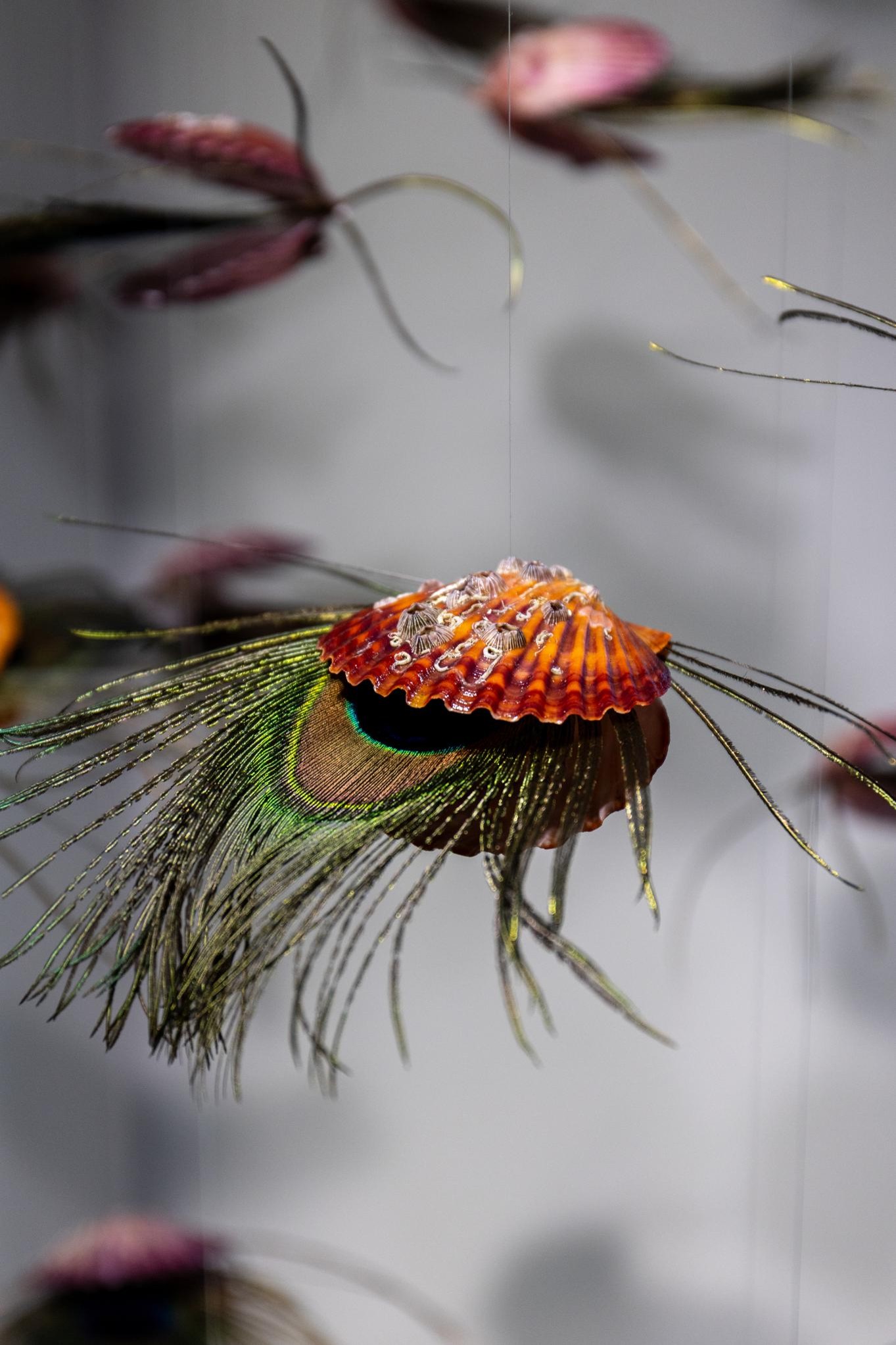
Scallop shells became especially important within this body of work. They embody both softness and strength—protective like armor, yet delicate. That balance between fragility and strength fascinated me.
In Korea, scallop shells are everywhere—in markets, restaurants, and homes. They’re familiar objects, but I wanted to reframe them—transforming something ordinary into something symbolic and protective.
This led to what I call AquaAngels. These forms began to feel like guardians—not religious figures, but spiritual presences that watch over you and hold space.
While creating these works, I thought deeply about childhood memory—how memory shifts, softens, and distorts over time. Water became the perfect metaphor for that transformation.
Heart to Back, Back to Heart is a deeply personal piece referencing protection, support, and emotional weight—both carrying someone and being carried.
By this stage, I felt more confident working with objects—not just photographs, but physical materials that exist in space and carry history.
Repetition also became important. Using the same materials repeatedly—eggs, shells, fabric, glass, metal—allowed a visual language to form. These recurring elements became recognizable, turning experimentation into a cohesive vocabulary.
This exhibition also led me to reflect on the idea of home. What defines home? Is it a place, a feeling, a group of people, or a memory?
I’ve lived in Sarasota, New York City, and Seoul, traveling through many cities and spaces. Each place shapes who you are and leaves something behind while giving something new.
At this stage, I began thinking about cycles—the cycle of life, memory, and making: creating work, releasing it, resting, and beginning again. That rhythm became central to my process.
I also became more interested in Korean material culture—objects that may seem ordinary but become meaningful when recontextualized. That act of recontextualization—presenting familiar objects in new ways—became central to my practice.
Looking back, this exhibition felt like a turning point—a moment when I began trusting myself more fully, no longer questioning every decision.
I started thinking more deeply about identity and belonging—what it means to exist between places, cultures, and languages. I don’t always feel rooted in one location, but I’ve learned that belonging can exist in multiple places at once—in friendships, communities, and relationships—not only in geography.
I feel deeply grateful for the community I’ve built here in Seoul—for the people who supported and believed in me, even when I didn’t believe in myself. That kind of support cannot be taken for granted.
Support matters. Invitation matters. Being welcomed into spaces matters.
I return again to the word invitation. So much of my career has happened because someone invited me, believed in me, and opened a door. That act of invitation is powerful—it creates opportunity and builds community.
If you have the ability to invite someone, do it. If you can support someone, do it. If you can share space, do it. Those small gestures create ripple effects—and those ripple effects can change someone’s life.
Looking back—from the breakup, to moving to Korea, to making the book, to building exhibitions—none of it was planned. None of it followed a straight line.
It was messy, confusing, and exhausting—but also beautiful and necessary.
Failure is not the opposite of success—it is part of success. Every mistake teaches something. Every wrong decision lead somewhere new. Sometimes those unexpected places are exactly where you are meant to be.
I also want to emphasize the importance of rest. Rest is essential. After major projects, I crash. I sit in bed, stare at walls, and do nothing—and that’s okay. Rest is part of the cycle, just like making, releasing, and beginning again.
If there is one message I want to leave you with, it’s this: trust yourself and your instincts—even when you don’t fully understand what you’re doing, even when things feel uncertain or uncomfortable.
Growth happens through discomfort. Change happens through uncertainty. Meaning often arrives later.
You don’t need to have everything figured out. You don’t need to see the entire path. You only need to take the next step—one step at a time, one decision at a time, one day at a time.
Thank you for listening, for being here, and for sharing this space with me.
And thank you for being part of this ongoing ripple effect.
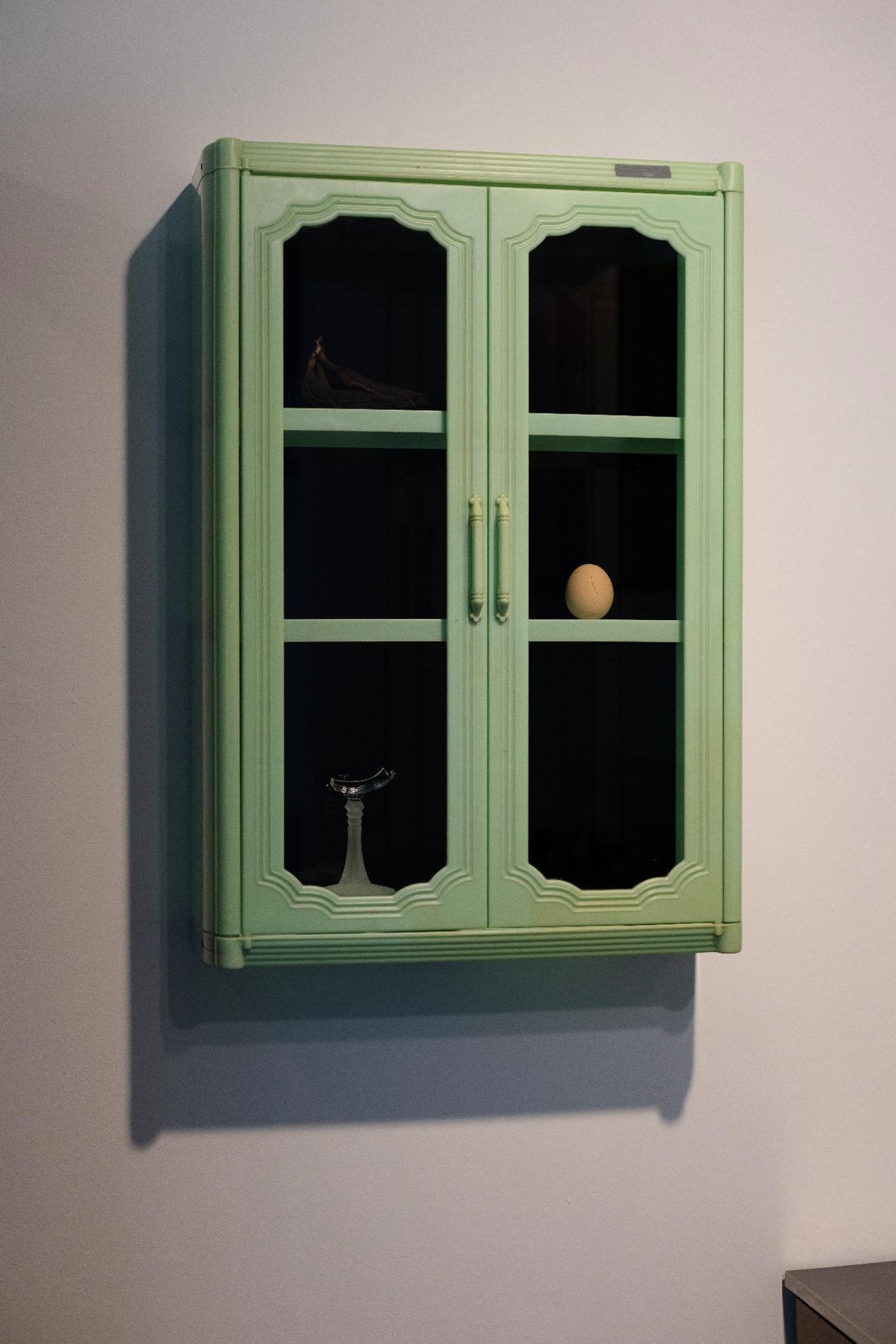
"I love the reality of life that this shows, because life is not always beautiful. I think light shines brightest in dark spaces. That's what this is a metaphor for. I find beauty in things that other people dismiss. To me, it illustrates the cracks within our lives, and how we just keep going."
All the pictures from The Talk's presentation are courtesy of the artist.
Thanks to those who joined in person and online, to the many connecting nodes who actively helped spread the word about this event, and to the ARTCaffè Brewing Committee!