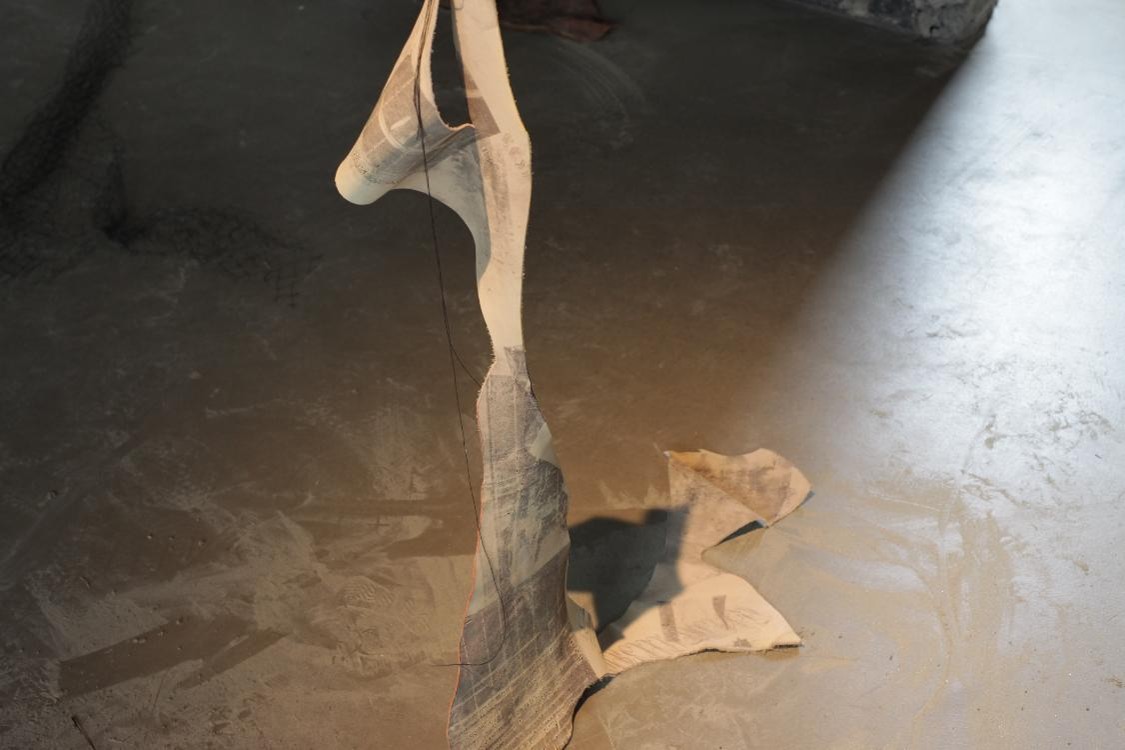
At the 109th ARTCaffè, Jioong Kang looks at his recent photographic practice, tracing his journey from controlled, traditional images toward a more experimental and material approach. Through photographs exposed to mudflats, water, sunlight, and changing environments, as well as works on paper, linen, and leather, he explores how images physically transform, revealing traces of time, memory,light, and unseen forces.
Below is a recap of The Talk.
Jioong Kang: I work with photographs that I take or collect. I started developing this practice in 2024, with my first solo exhibition, and have continued to explore it over the past few years.
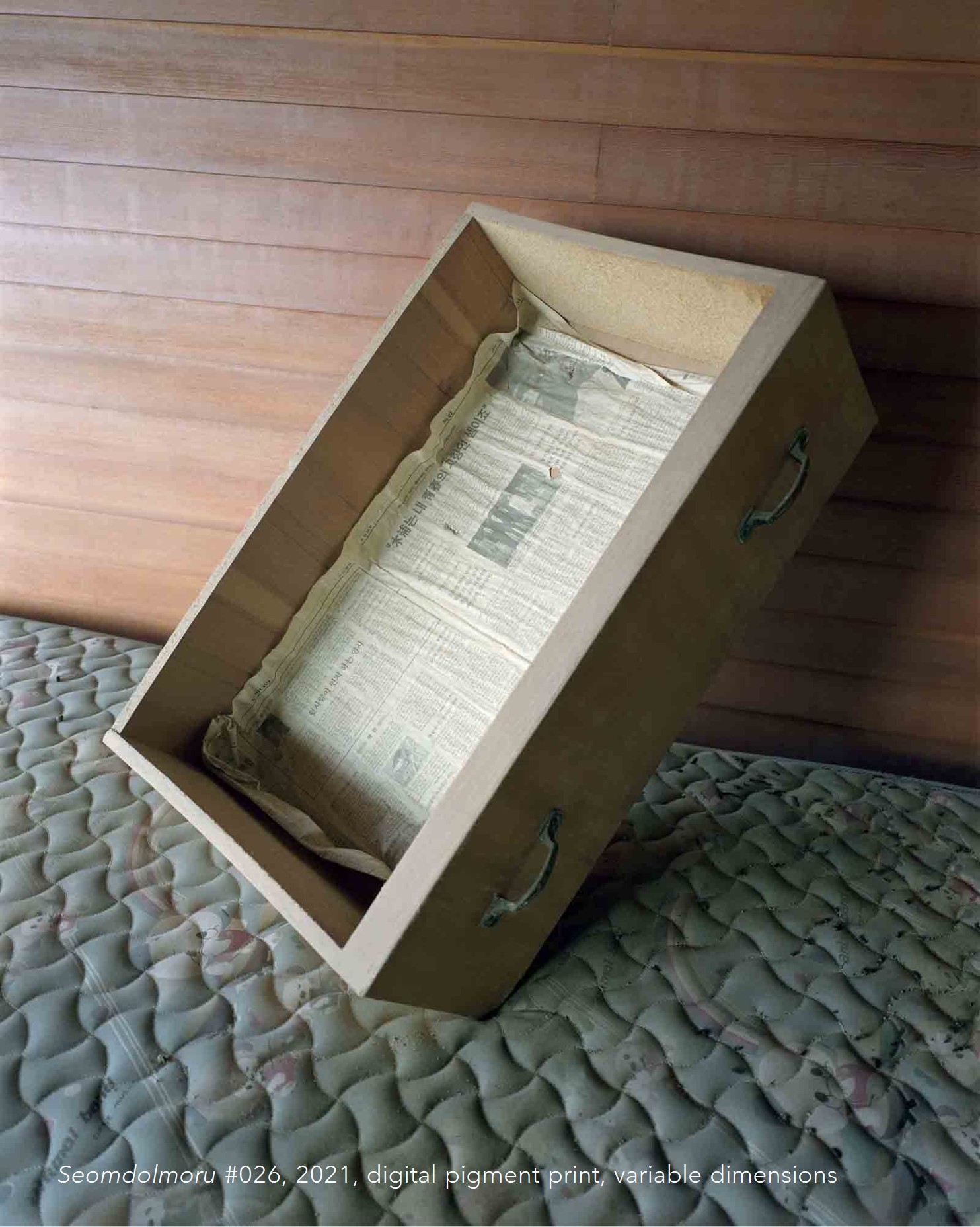
When I was a university student, I wanted to make photographs that were high-quality and well-finished, while researching the political, historical, and personal memories connected to an island that had been deserted and developed in the 1980s for the dictator of Korea. There was an artificial lake, and remnants of luxury condos.
I took these photographs with a 4x5 film camera and wanted the images to feel stable and well-controlled, creating high-quality photographs of this landscape.
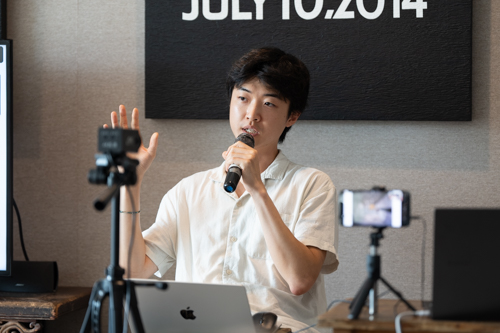
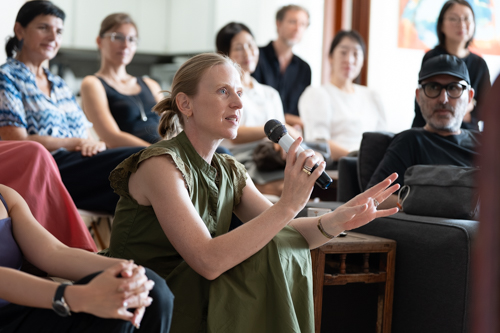
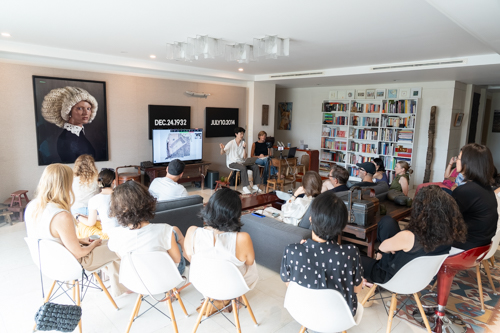
After making these photographs, however, I realized that the high quality of the images was not really important to me. I became less interested in this kind of controlled photographic image.
I started to feel that I wanted to reject the conventional way of making photographic images and, more broadly, the conventional way of approaching contemporary art.
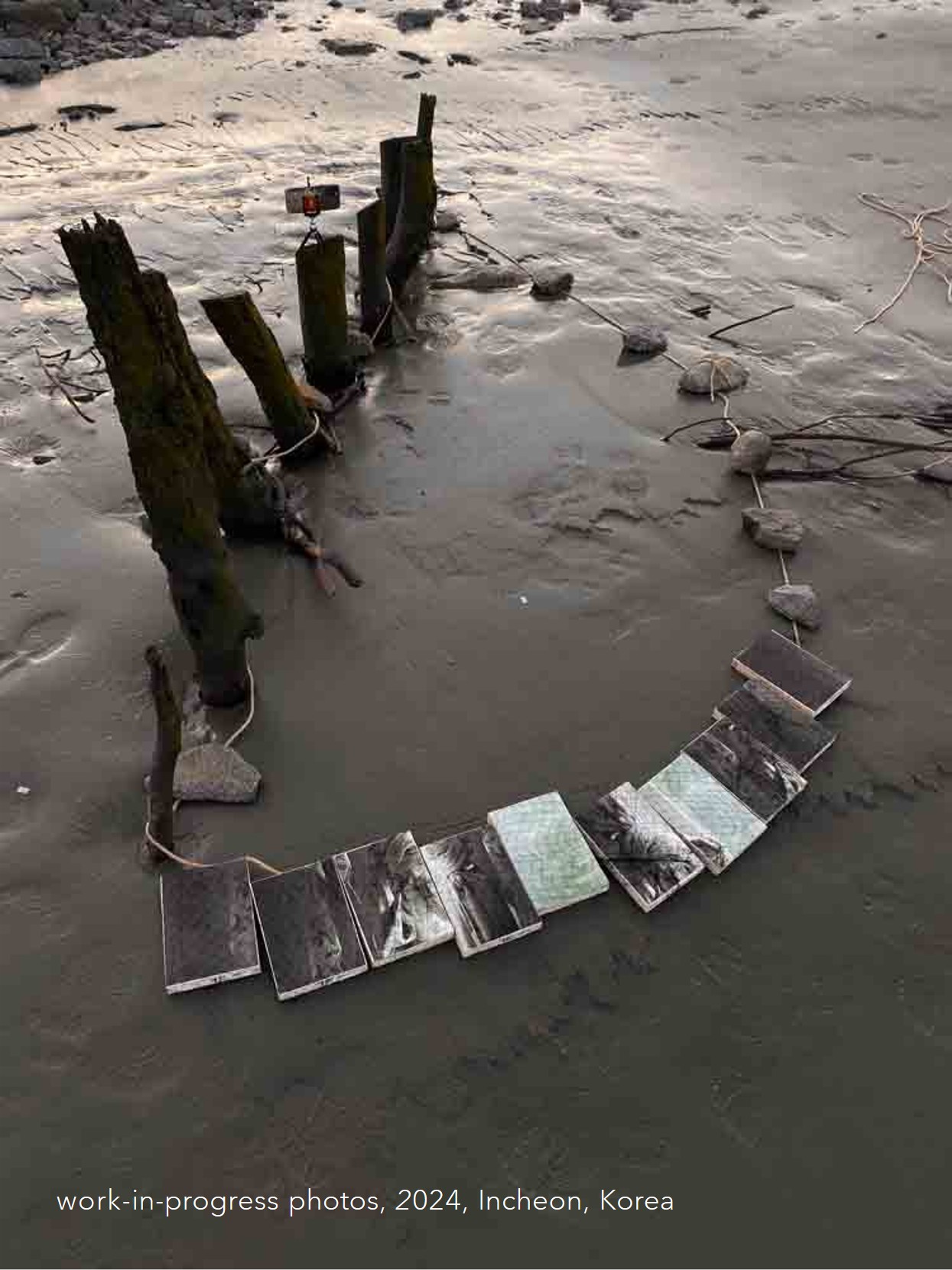
So, I took the prints that had been piling up at home and brought them to the seaside, leaving them on the west coast of Korea, in Incheon.
I placed them directly on the mudflats and used nets and ropes to keep the photographs from being blown away from the shore. The photographs became damaged and weathered, and I began to notice the traces left on their surfaces. I became interested in these mud-trace shapes and in the damaged photographs themselves.
As a production method, I placed the photographs inside a fishing net and also put rocks on the paper.
At that time, I was thinking about the fragility of photographic paper. I felt that the photographs could not really be preserved in my house because I was having problems with water leaks there. This led me to think about the possibility of speeding up time, in a way, by allowing the photographs to age.
The original images were photographs of the deserted island I mentioned earlier, and the final pieces carried the traces of the nets across their surfaces.
This became my first solo exhibition. I wanted to show people what I had made on the seashore of Korea.
I installed the works under a very mysterious light.
After this first exhibition, I wanted to make the images larger than before. At first, I considered making large prints on photographic paper, but that was too expensive, as both the photographic paper and the inks cost a lot.
So, I started looking for an alternative way to make large photographs.
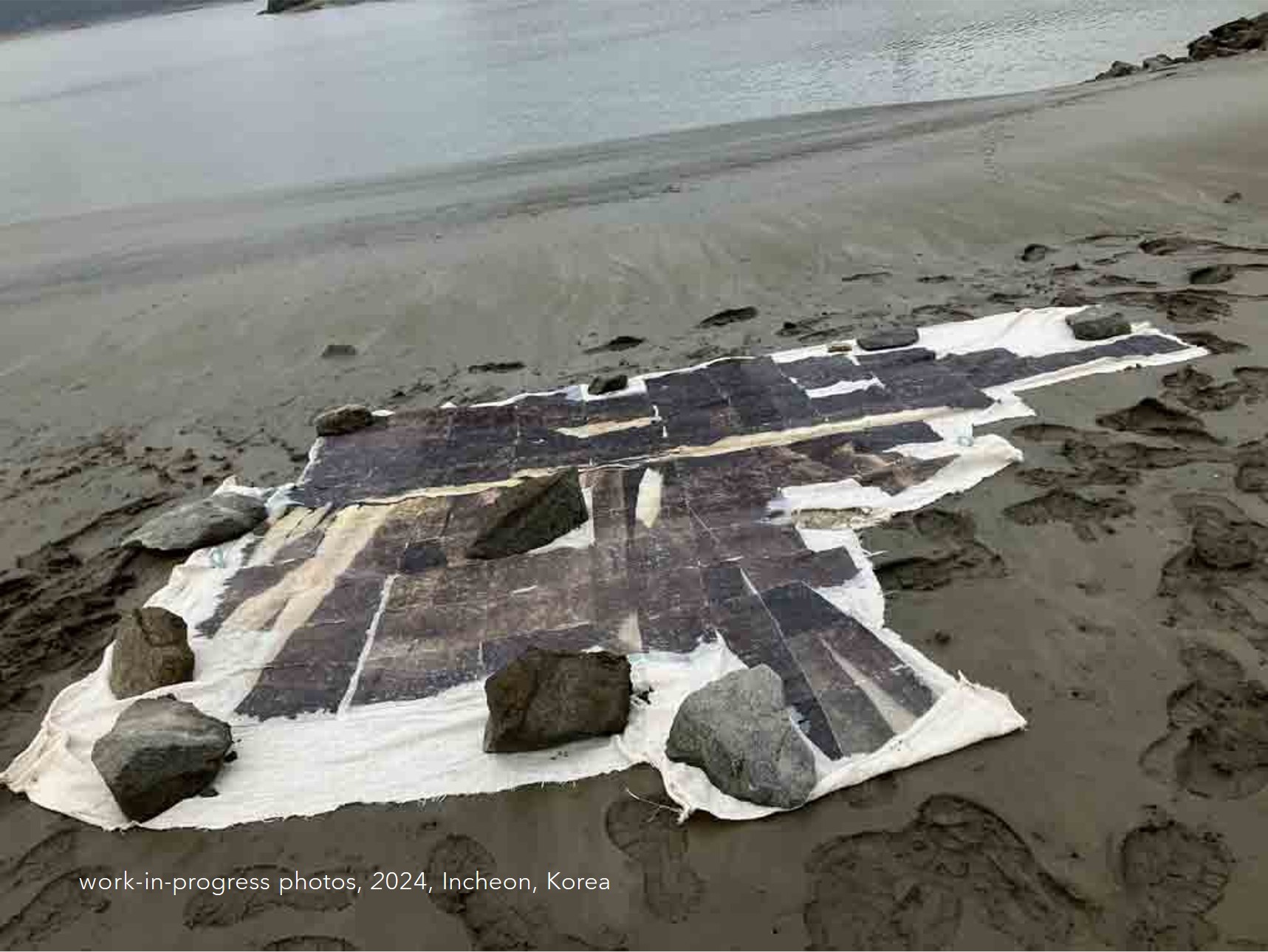
I found a way to transfer images onto linen using acrylic medium. I printed A4-sized inkjet photographs and used acrylic medium to transfer them onto the linen, arranging the images in a panoramic format.
I then brought the linen pieces to the mudflats and left them there for about three or four days. Because of the tides, they were repeatedly soaked and dried.
I placed them there at low tide and waited for about 12 hours. When the tide came back in, I removed them again.
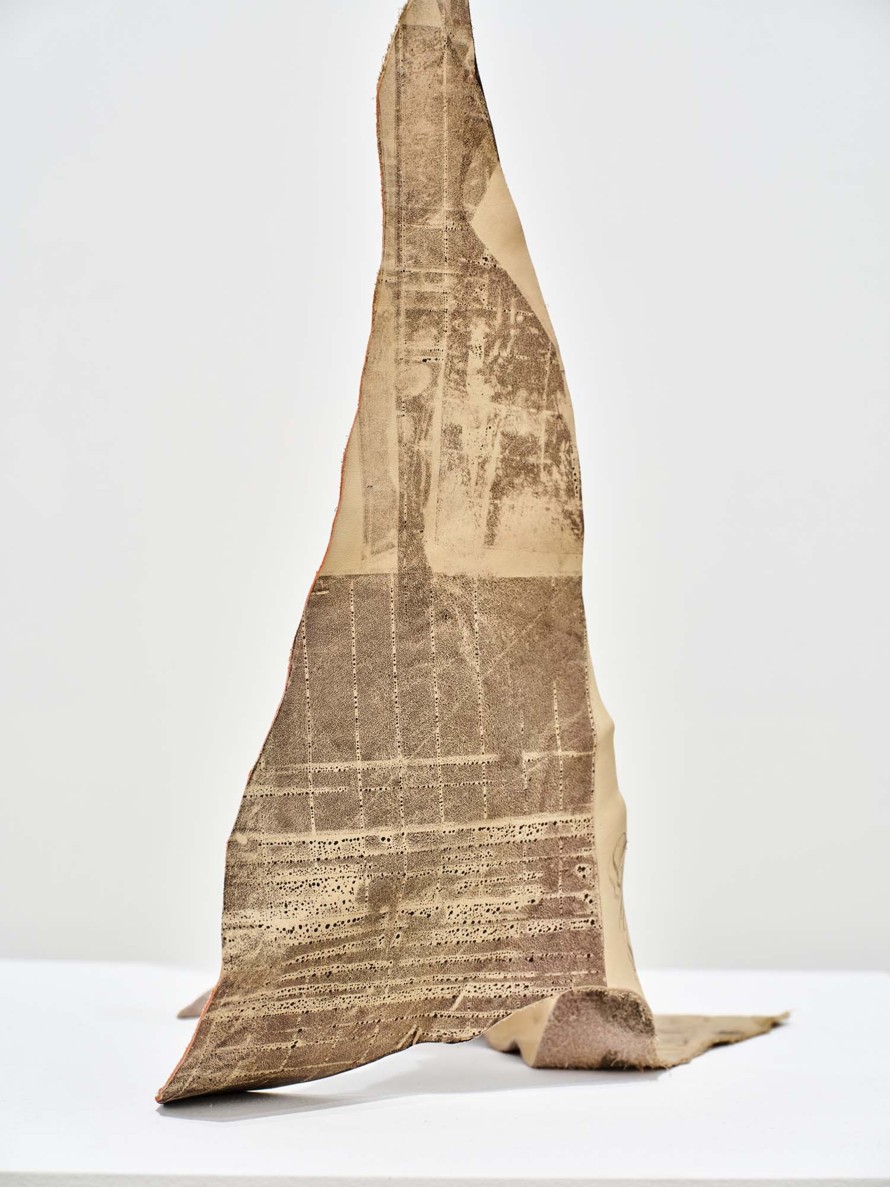
At that time, I also started printing on leather.
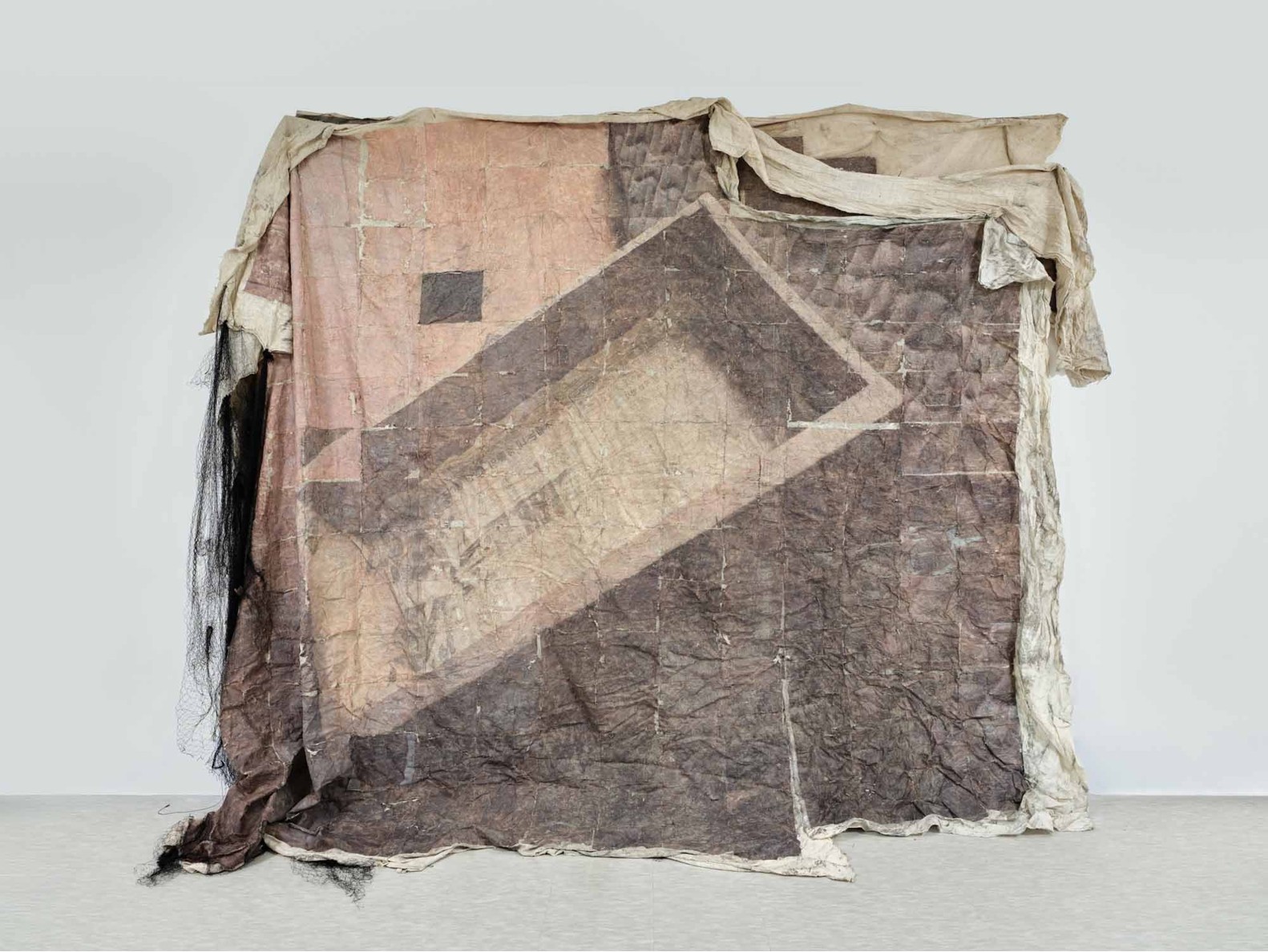
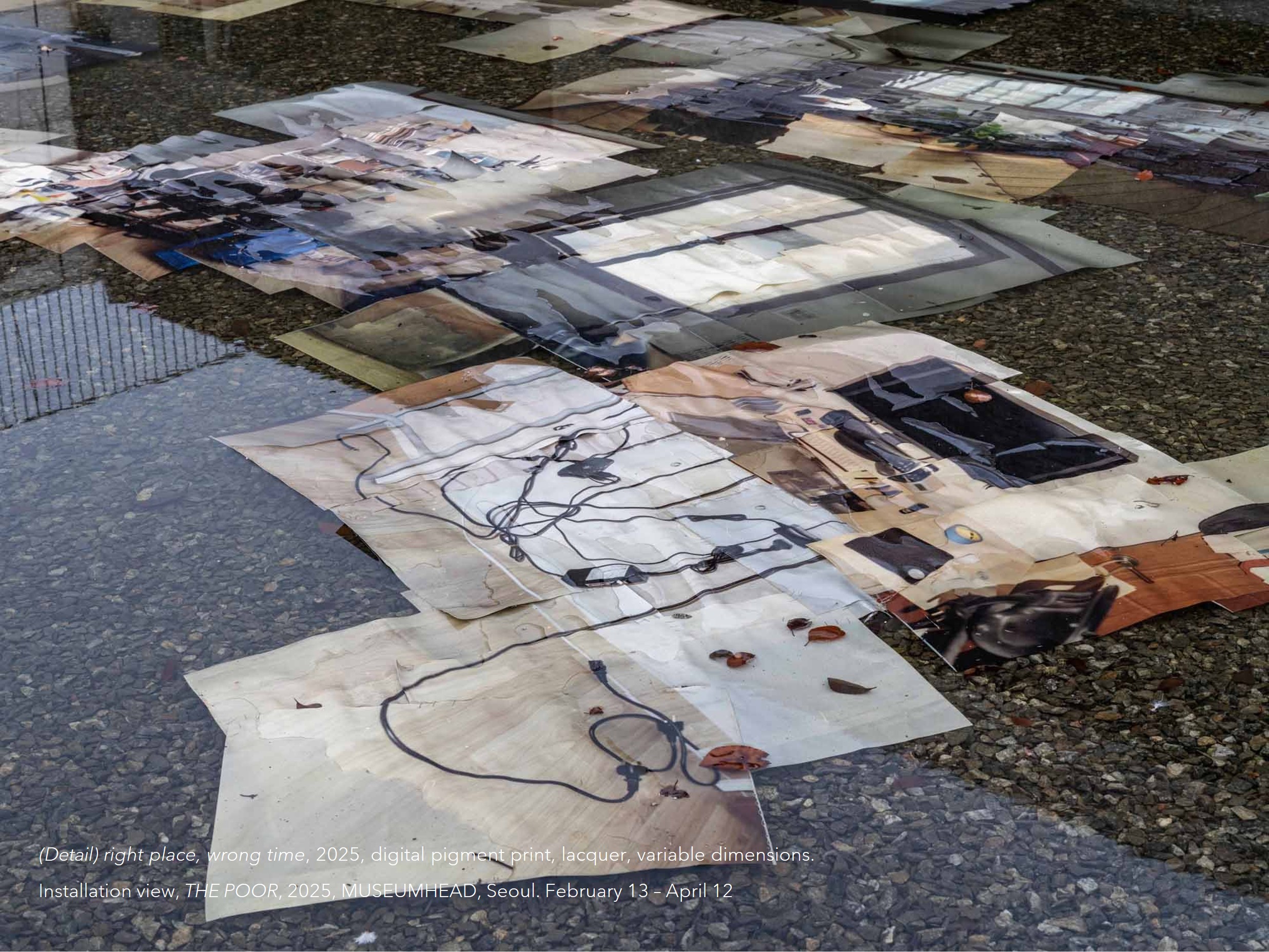
I was then invited to participate in an exhibition about poverty. For the exhibition, I photographed my small rented house, creating a panoramic image of the room, and then submerged the photograph in water for two months.
During those two months, from February to April, the weather became warmer. The photograph beganto swell and decay, while also collecting water. Green moss grew on its surface. I also discovered some negative images appearing on the photographs, almost like the back side of the image. On the back, there was a negative version of the image on the front.
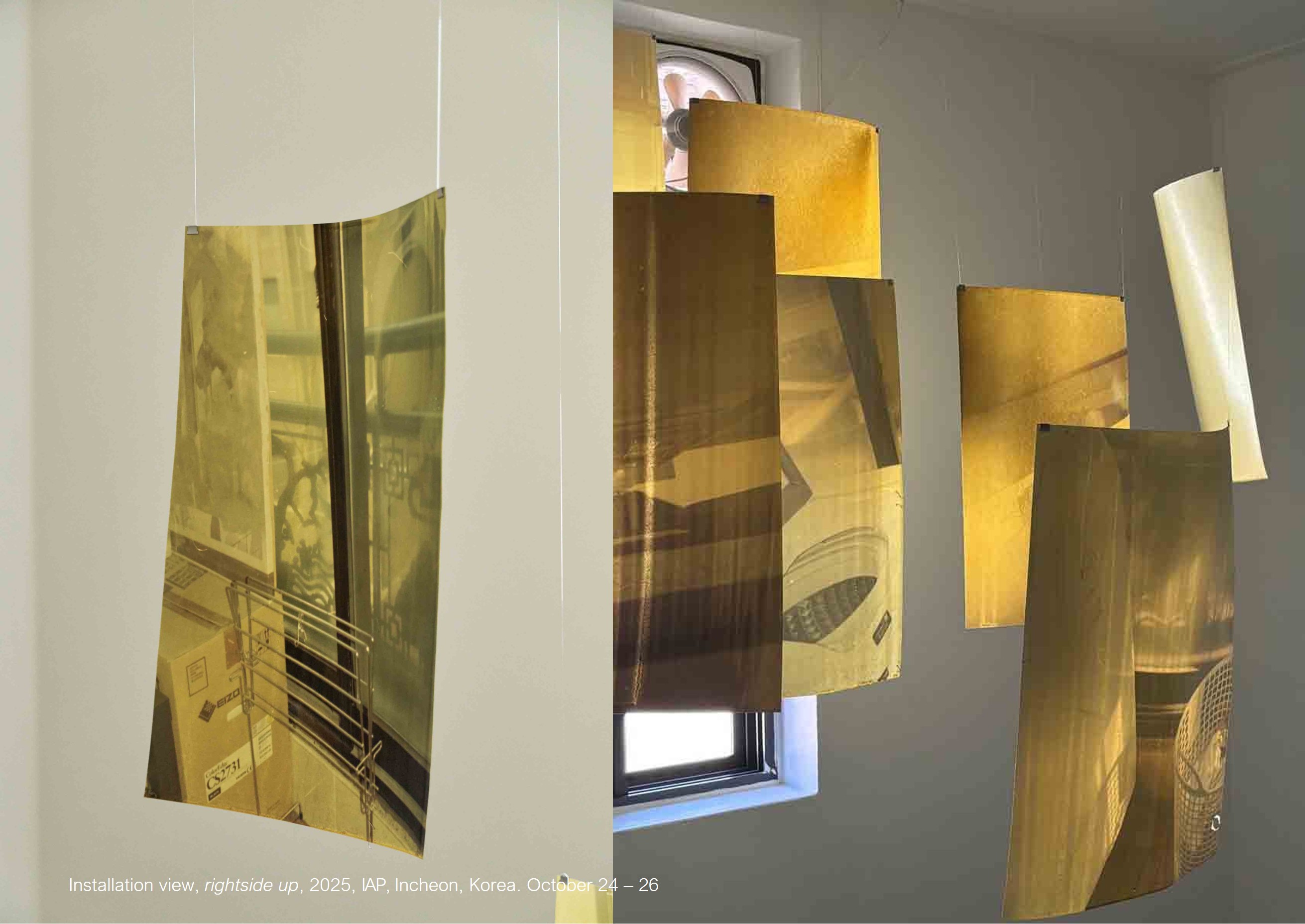
Some photographs that I had intended to submerge but that were not selected for the exhibition remained stored in my studio. One day, I accidentally discovered something interesting: a transparency in the photographic paper that had been created by the varnishing process.
I had applied varnish because the photographs had to remain underwater for two months. I useda yellow lacquer, and through this process I discovered this transparency: you could see the front image from the back.
During my residency at Incheon Art Platform last year, I was preparing another exhibition, and I was frustrated that, for practical reasons, I still couldn't make the images larger. Wet paper is extremely fragile and weak, so I couldn't transport the works to another place.
I thought it would be interesting, instead, to make the work and hold an exhibition right by the sea.
With support from the city of Incheon, I worked for one month in an empty tofu restaurant by the sea. I rented the restaurant for two months and then held an exhibition there for another month. I exhibited on the floor the large works that I had made directly on the mudflats, as well as gum prints using historical archives of Incheon —historical images dating back to the 19th century.
The photographs were made on the sand of the beach, and they were exposed to the changing sunlight by the sea.
My recent show at Meyer Riegger Wolff was my first gallery exhibition, and it brought together works that I had developed over the previous three or four years.
The title, Phototaxis, is a word from biology. It describes the movement of an organism toward or away from a source of light.
The exhibition presents photography not as a fixed image, but as a material that continuously responds to time, space, light, and its surrounding environment.
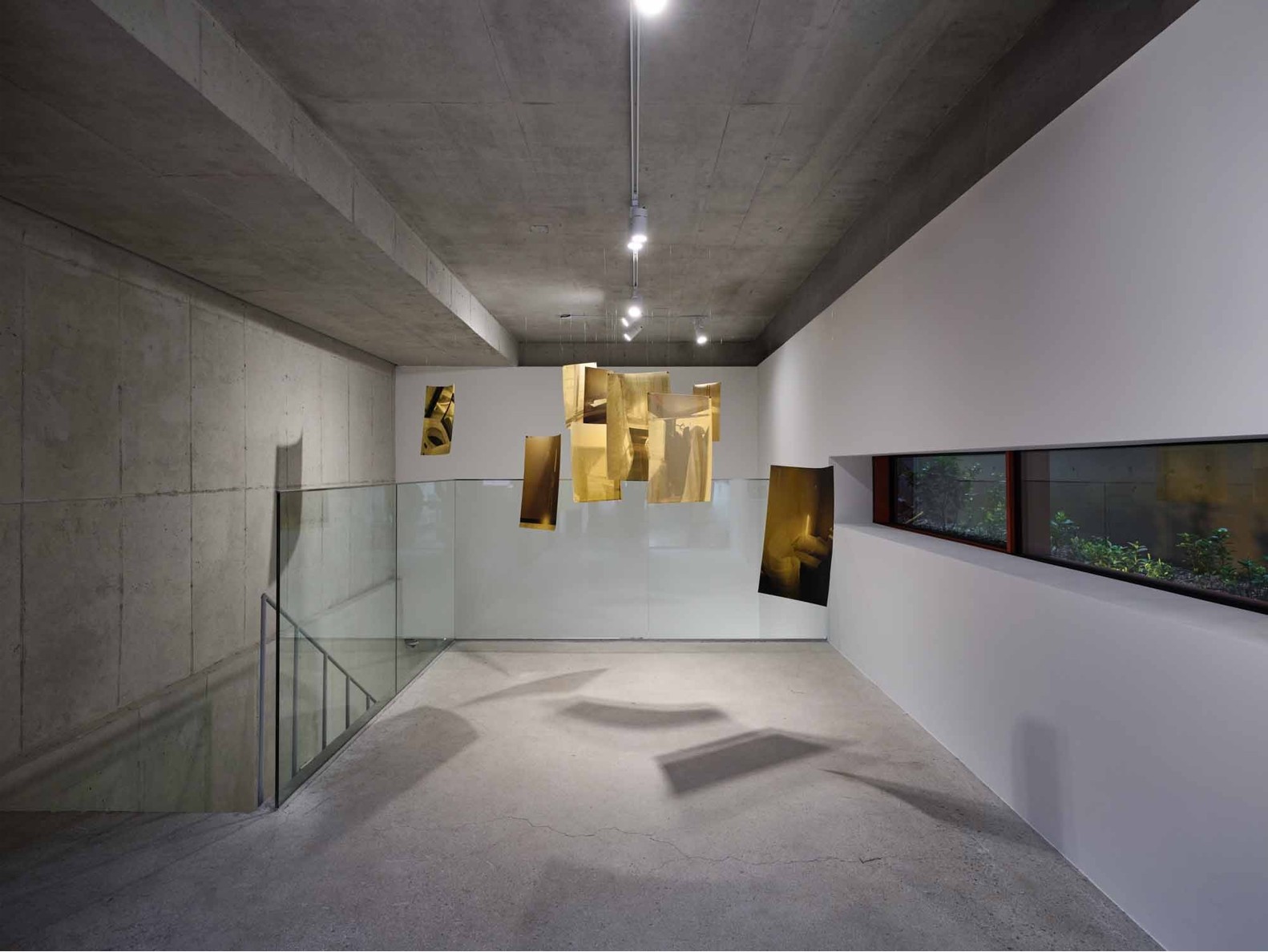
The director of the gallery came to my studio, saw the photographs of my apartment that I had hung as an installation, and suggested installing this work in front of the entrance because sunlight comes through the gallery window.
As I mentioned earlier, these are all the backs of photographic paper. We can see the front image from the back, and the work also reacts to the sunlight coming through the window.
The shapes and positions of the shadows keep changing, so this became one of the key works in the exhibition.
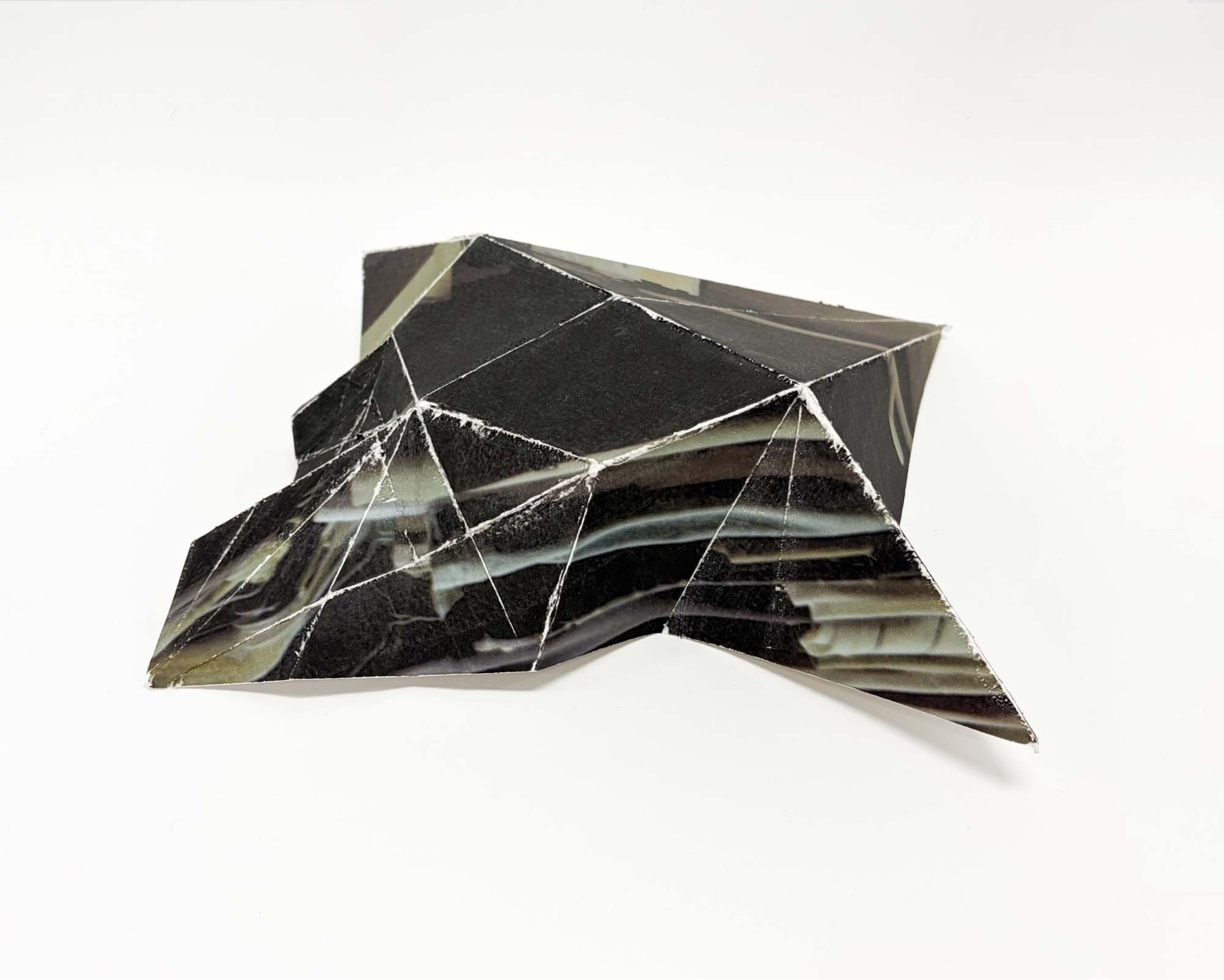
Downstairs, there were other photographs damaged by mud, as well as photographs on leather and linen, scratched photographs, and sculptural origami paper works.
For this exhibition, I really focused on the contrast of scale, as well as on the variety of surfaces and materials. There were also hanging leather pieces.
All these images are part of the same process: taking something familiar and allowing it to change through material, time, and the environment.
"Photography itself is one of the inspirations for me: how people see photography and how they exhibit it in contemporary art. I'm just interested in the life of the printed matter."
- Jioong Kang
All the pictures from The Talk's presentation are courtesy of the artist and Meyer Riegger Wolff Gallery.
Thanks to those who joined in person and online;, and the many connecting nodes who actively helped spread the word about this event.