At the 110th ARTCaffè, Ndivhuho Rasengani explores movement as material, tracing how his practice evolves from architecture into sculpture through glass, light, mechanical systems, smoke, and kinetic elements. Moving between cities and experiences, he reflects on home, memory, the body, and the intimate rituals of dwelling. His latest works bring together fragments from different stages of his practice, creating vessels that hold light, smoke, space, time, and potentially people’s attention.
Below is a recap of The Talk.
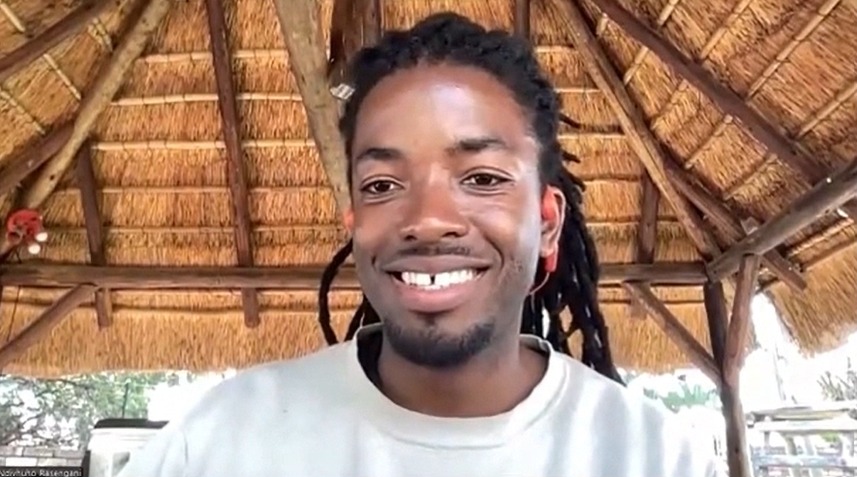
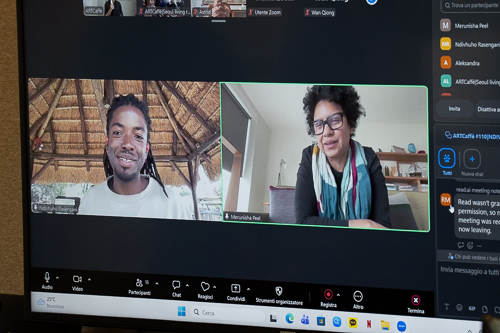
Ndivhuho Rasengani: I'm tuning in from my parents' backyard, which doubles as my making studio when I'm in Johannesburg.
Today, I'm excited to delve into my practice with you all.
I think movement has been one of the core foundations, one of the pillars, within my practice. I usually speak about material, but Movement As Material felt like a great way to synthesize the two.
In early 2019, I moved away from architecture. I had just completed my architectural education, thanks to which I learned how to think about space, scale, structure, and the human body. Towards the end of my education, I realized that I was becoming more and more interested in the physical experience of space, rather than just thinking about designing buildings.
When I first started making, I created sculptures thinking about transparency: glass, plexiglass, and metal, materials that are used in architectural buildings in some form, as well as reflective surfaces and, lastly, light. This was the beginning of how I would speak about these materials. I hadn't been making atthat point; during my education, I had learned about all the ways to make. Very quickly and furiously, I became obsessed with the idea of looking at steel as a mechanism for me to draw in space, to create objects that resonated with the interior structure of these buildings.
I also used glass as a way to learn more about movement. It slowly flows when it's hot and moves like honey, and then solidifies into this crystal. It allowed me to play with light in beautiful ways. It also held movement in a state—it captures movement and then crystallizes it. So, a lot of the work at this point was about building these structures that would become the pillars, or the architecture, around which people could move in and around my work.
Then, I started actually activating the sculptures and allowing people to move them, either by holding them and physically spinning them, and giving them the chance to become part of how the architecture sits in the space. I wanted the objects to move, but I also wanted people to be encouraged to move through the space. I think one of the things I love about being a sculptor and an artist is that I can now ask people to come in and be a little bit curious, making them wonder: What do these objects do? How can they move, and why do they move?
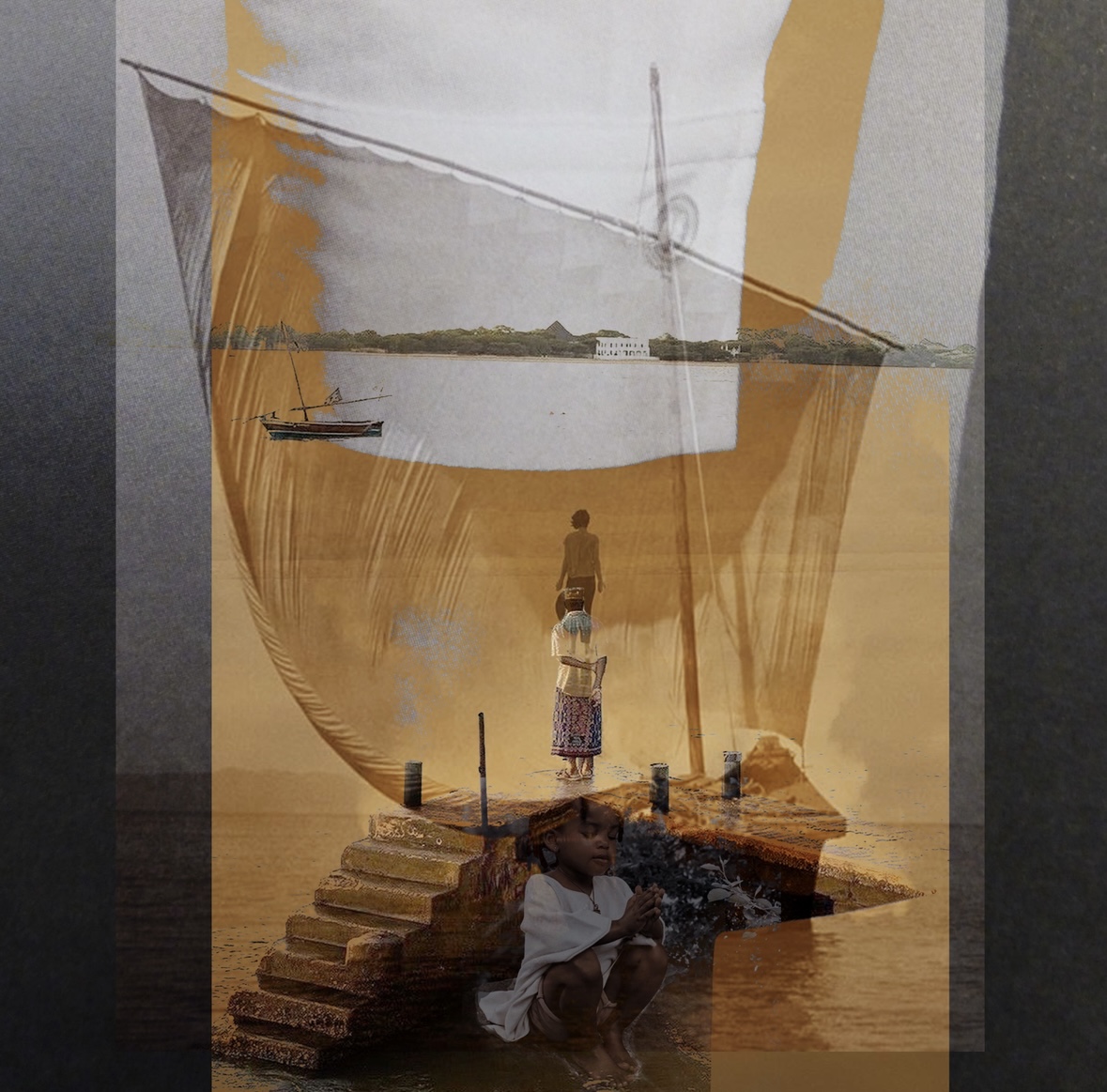
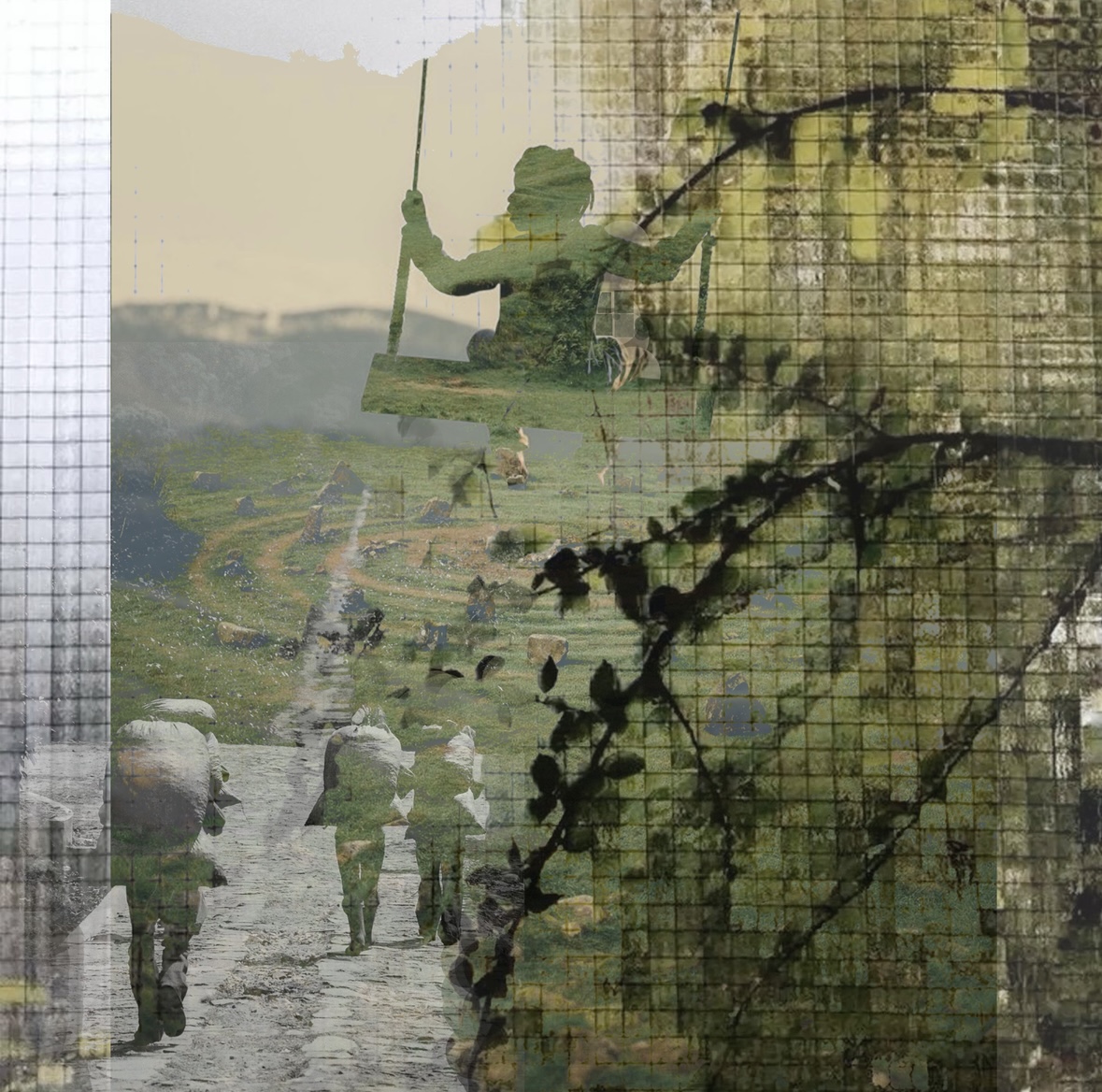
Alongside my practice, there are cue cards, which are collage works that I was formulating and thinking through in terms of textures and ideas. At this point, a lot of the collages were really heavy and dense, and these were the sensibilities that I was thinking through digitally as I was learning how to make moving sculptures and objects.
Towards the end of my MFA, I moved back into architecture, asking: How can my sculptures perform as architecture? How can they scale up to the scale of architecture while your body is still implicated? But then I twisted it, and I allowed the sculptures to still be moved and approached by the person. I wanted the sculptures to occupy space, but I also wanted viewers to experience multiple perspectives through touch and by moving around. I didn't want it to be only visual; I wanted it to be a way, or a mechanism, for curiosity. Like: Does this move? Can I touch this? It was very key and pivotal at this point.
The movement cue card, this digital collage, started to move with my sculptures. I have a history in movement and dance, so to activate my cue cards this way was really incredible.
I moved to Chicago in 2021, and I had the opportunity to show at the New Gallery. It was one of the first times that I had a whole space where I could put all the objects, and it had all my sensibilities: scale, touch, distance, reflection.
At this moment, I was super drawn to creating objects that were in the centre. I wanted the work to be in the centre. I still wanted people's bodies, which carry memory, their histories, and the histories of the places they come from, to move within the space, but always to orient themselves around the central objects.
These objects had a sense of reflection, so you would move and see yourself. All of these objects had a sense of stillness or repose, even though they were domineering in their scale.
This was an interesting time for me. I quickly recognized that I love creating objects that can be still and in repose, but there was something about this that didn't quite land perfectly for me. I think I was missing home quite a bit at this point.
Everything was small. There was an intimacy that I was starting to pull through.
A friend and I had this beautiful opportunity to finally create work in a public setting. And immediately, we decided that we would move all the objects out. We would create architecture. I think buildings are the frame for people to live in and inhabit. We wanted to create these sculptures that would be a space within an open field. We used all our materials.
It was really fun because we could see what it looked like to create sculptures that were in an open field, but still created enough intimacy. It was a room within the city that allowed people to have a moment of serenity, a moment of curiosity, a moment where they could play as adults or as children. And it was here that we started to get back to some of the roots, where light was moving across the surface. Time seemed like it was moving slowly, and both still and quickly, especially within the city. The kinetic system just did all the right things to get us back to some of the core ideals.
After this moment, I then had one last opportunity to make in Philadelphia. And I wanted to go back to stillness. At that point, we had done everything where there was a lot of movement. I wanted to come back to repose, having objects that gathered together and created a stillness, like a vibrating stillness. So, it was here that I played with the idea of releasing some of the materials, like wood, and just going back to steel and glass, the beginning of almost my making journey.
Apart from the fact that we had access to huge kilns at Wheaton Arts College, we also had space and time. So, I really got to dial in and play with each element that would come together to create this body of work. These pieces in particular are now held at the museum at Wheaton. The time and space that I got to play with glass again, in a way that I hadn't before, was truly just a blessing. The sensibilities of the digital cue cards still played with the idea of water, but there was something that was happening in terms of my visual language, or how I spoke to myself.
I moved then back to South Africa, which was quite interesting. I got the opportunity to understand movement in a new way. I was working in workshops where I couldn't fully work alone. These were huge production houses for glass and blown glass in Swaziland. I had to learn movement with friends and teammates, and I was teaching them how I saw glass. They were master fabricators, but I was teaching them new ways to put steel in a kiln. It was fun and exciting to see how they navigated my practice with me, while at the same time, I was learning how to use these very hard materials in a new context.
I was carrying so much of my history from Chicago, New York, and Rhode Island. All of that was coming with me. This was a really key point for me because I started to realize: I am home. I am the vessel. I am the architecture that's carrying all of this knowledge, and the sculptures contain some of that embedded history. The cue card at this point was one that landed absolutely beautifully for me. It felt like I had told my story, like all the stories of all the time that I had compacted within those past three years.
All of this was happening between 2019 and 2023. At this point, learning how my work looked in South Africa, I came to these very fun modes of having my sculptures move, but also be activated by other factors. Some of them would be activated by fire, smoke, or water. This is the beginning of what I call the Held series. Everything is being held: either it's a holder or a vessel of light, a holder or a vessel of water, or a holder or vessel of these moments that we have in the home, but also within design spaces.
This was me learning what it looked like to be an artist on home soil. I've been moving quite a bit all over South Africa, Johannesburg being home, but it's been fun seeing what my art practice looked like. When I lived here, in 2019, I was an architect. To come back and to see myself anew was just incredible.
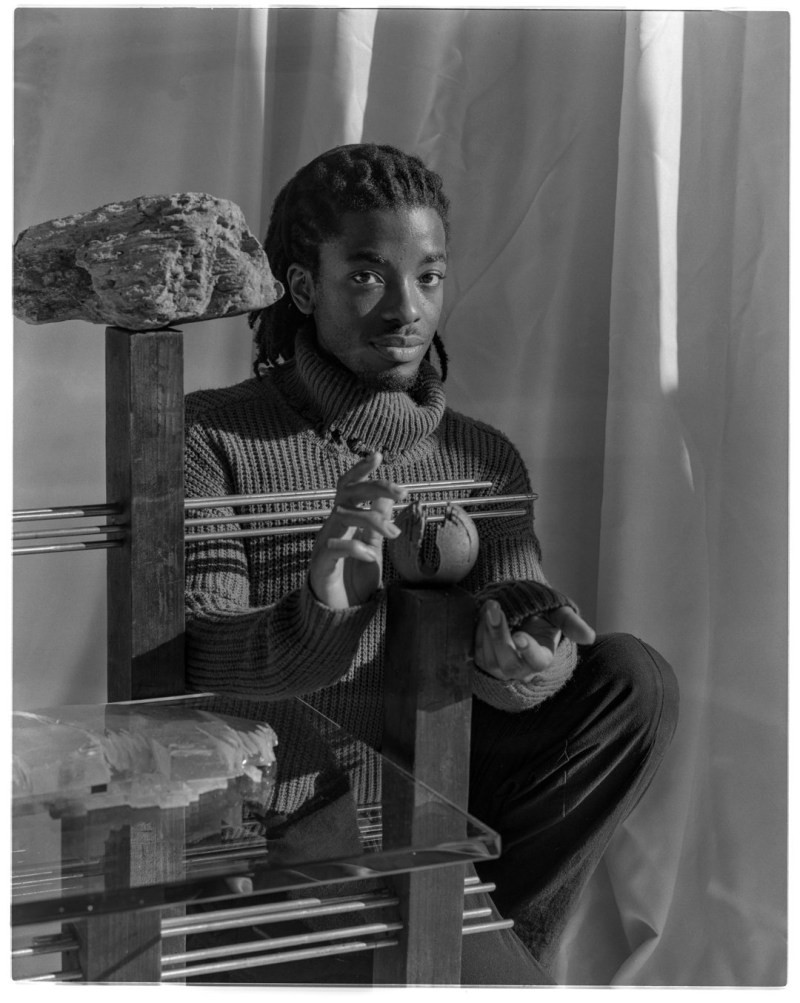
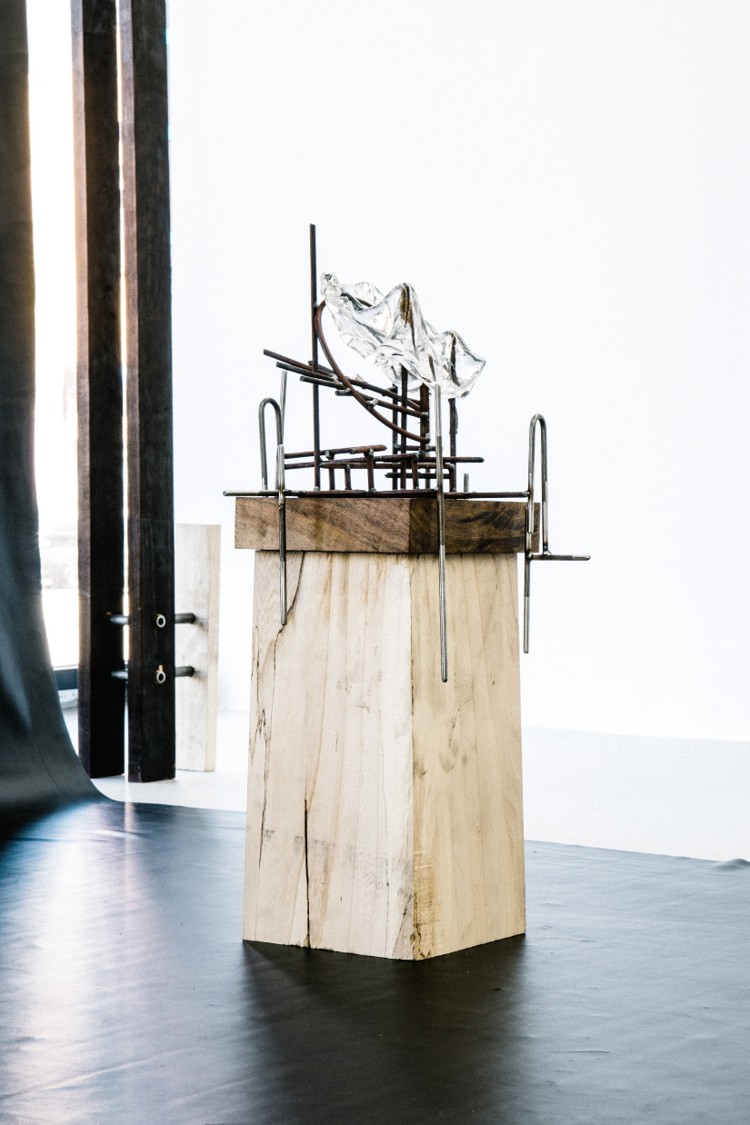
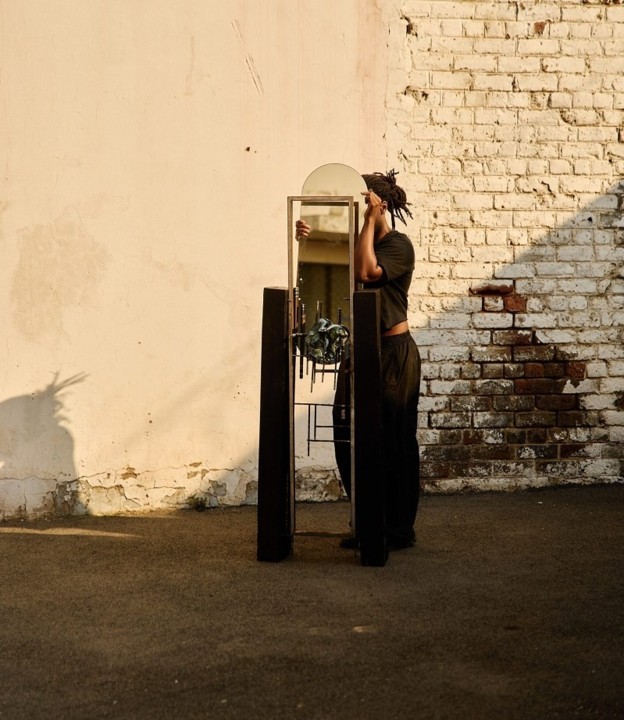
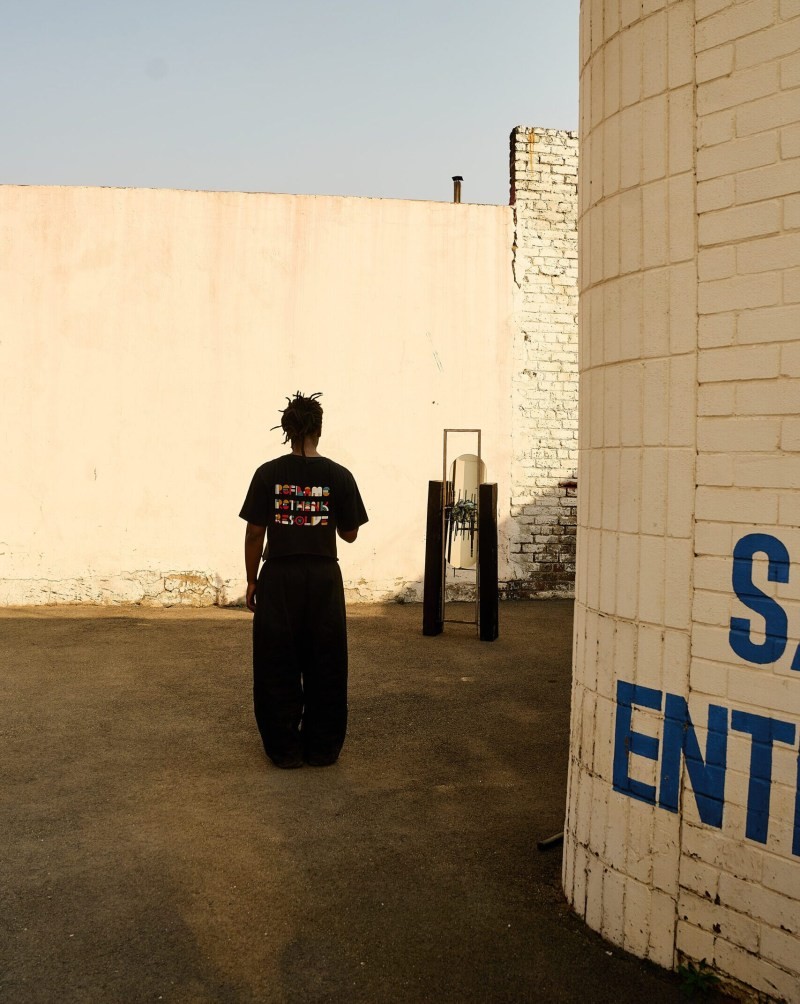
I did a bunch of photoshoots all over the city, and here we're starting to see the textures that I'm learning, the cadence and the rhythms. I'm learning about home again, even now. And I'm seeing it more in the way that I'm positioning some of the sculptures outside, but they have a different temperament.
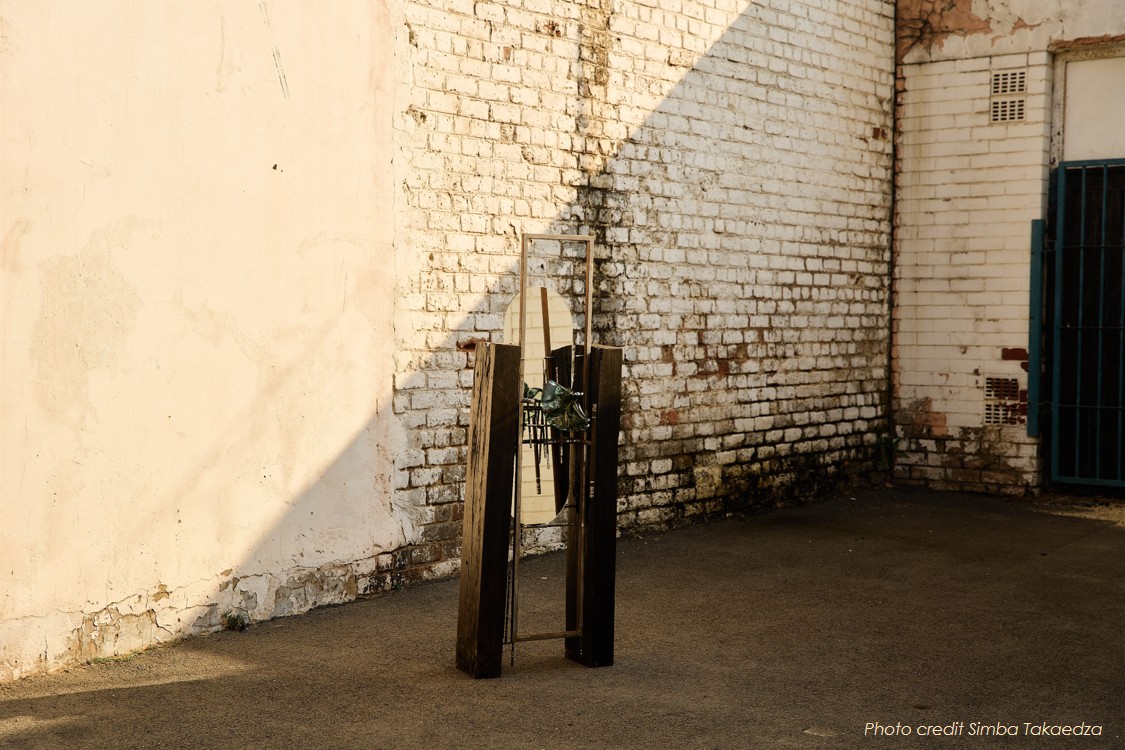
Out in the field with some of my friends, I decided to take these sculptures and really see how they land in the city. These are alleyways within, really deep crevices within the industrial parts of the city. And I'm so grateful to my friends for allowing me the craziness of, “I want to see what the work looks like out in the different parts of the city.”
Later, I had the opportunity to be at the Swatch Art Peace Hotel residency in Shanghai. There, I wanted to go back to movement. This time, mechanical movement. Where better to learn about motors and systems, more kinetic systems, and how to put that into some of the artillery, or some of my toolkit, if you will?
Here, I learned about small motors and saw that a person would come into the space and find the pieces moving. The activation of these pieces is different. The way we come to them is different. The thing about these is that they showcase movement, but with light and sound as the activators. You look at it and say, “Oh, it's moving so slowly,” akin to our watch, akin to moving systems that have a life of their own, but still ask the viewer to come closer to see what's actually happening.
I tried to do some movement cue cards while I was out there, and the language completely changed. I realized that I was going to allow this practice to incubate a little bit more, definitely influenced by the city, by the busyness and the tiredness. I think I wasn't able to fully process all of the movement, but I still love how these landed.
This brings us to Rituals of Dwelling. A lot of the pieces and the technology came together here. I had the opportunity to showcase with Raquel Portillo and Jonggun Lee. We had met at the beginning of January. We both went to the Rhode Island School of Design, and Jonggun and I had kept in touch for some time. And then he said, “Let's potentially look at doing something together.” Raquel was like, “Absolutely, let's do it now.”
Rituals of Dwelling came out of Raquel looking at the pieces and spending time thinking about the ritual nature of these objects, and how the intimacy that they bring could also be part of the daily rituals of being in the home.
I have incense holders, or smoke holders, and vessels which hold smoke and allow it to emanate from within. I have these sculptures which would rotate mechanically, coming from the previous work at the Swatch Residency, and thinking about these slow-moving elements which would bounce light off and reflect it into the room.
I had more incense holders which almost took from a lot of the cities that I had been to, but had the smoothness and textures that I had been grappling with here at home. You see smooth rocks that also have cityscapes extracted from them. You have these beautiful glass orbs with light emanating from the centre, and again, just more smoke emanating from within these sculptures.
Rituals of Dwelling took place in June, and this was one of those moments where I was like, “I'm keying into a new thing.” Small, more intimate objects. Intimate objects that move, but that have elements from outside moving them.
This time was really beautiful because I had seen and carried a lot of the pieces from all of my work. I had pieces from Rhode Island, Chicago—I had pieces from everywhere I had made. A piece was seen, a piece was seen from all of the periods of my making, and I think this is where I currently am sitting.
This idea of the held objects that hold, the vessels that hold light, smoke, space, time, and potentially people's attention.
This is the work: movement as material. I think you guys have moved through movement as my practice.
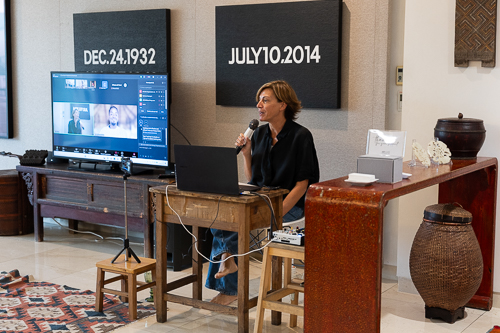
"I am the vessel. I am the architecture that's carrying all of this knowledge, and the sculptures contain some of that embedded history.” - Ndivhuho Rasengani
All the pictures from The Talk's presentation are courtesy of the artist.
Thanks to: