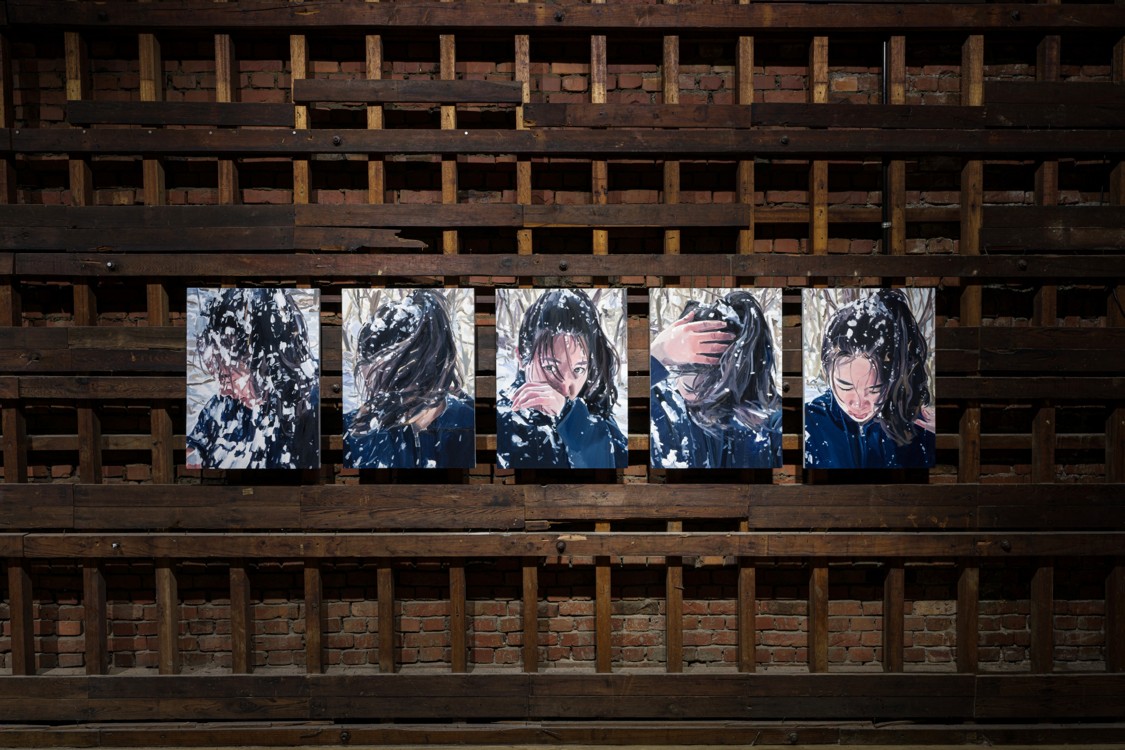
At the 110th ARTCaffè, Miryu Yoon took us behind the scenes of her painting practice, revealing how everyday snapshots evolved into carefully staged scenes, fictional characters, and mysterious worlds where reality and imagination intertwine. From Irish woodworkers to mythical swamp creatures lurking in the heart of Seoul, her paintings grow from personal encounters, unexpected discoveries, and a fascination with the stories we tell ourselves. In her most recent work, Miryu pushes beyond her comfort zone, exploring femininity, transformation, and the boundaries between opposites.
Below is a recap of The Talk.
Miryu Yoon: Today, I’ll take you through my journey, from my very first solo exhibition to my most recent paintings, so you can see how my ideas and my approach to painting have evolved over the years.
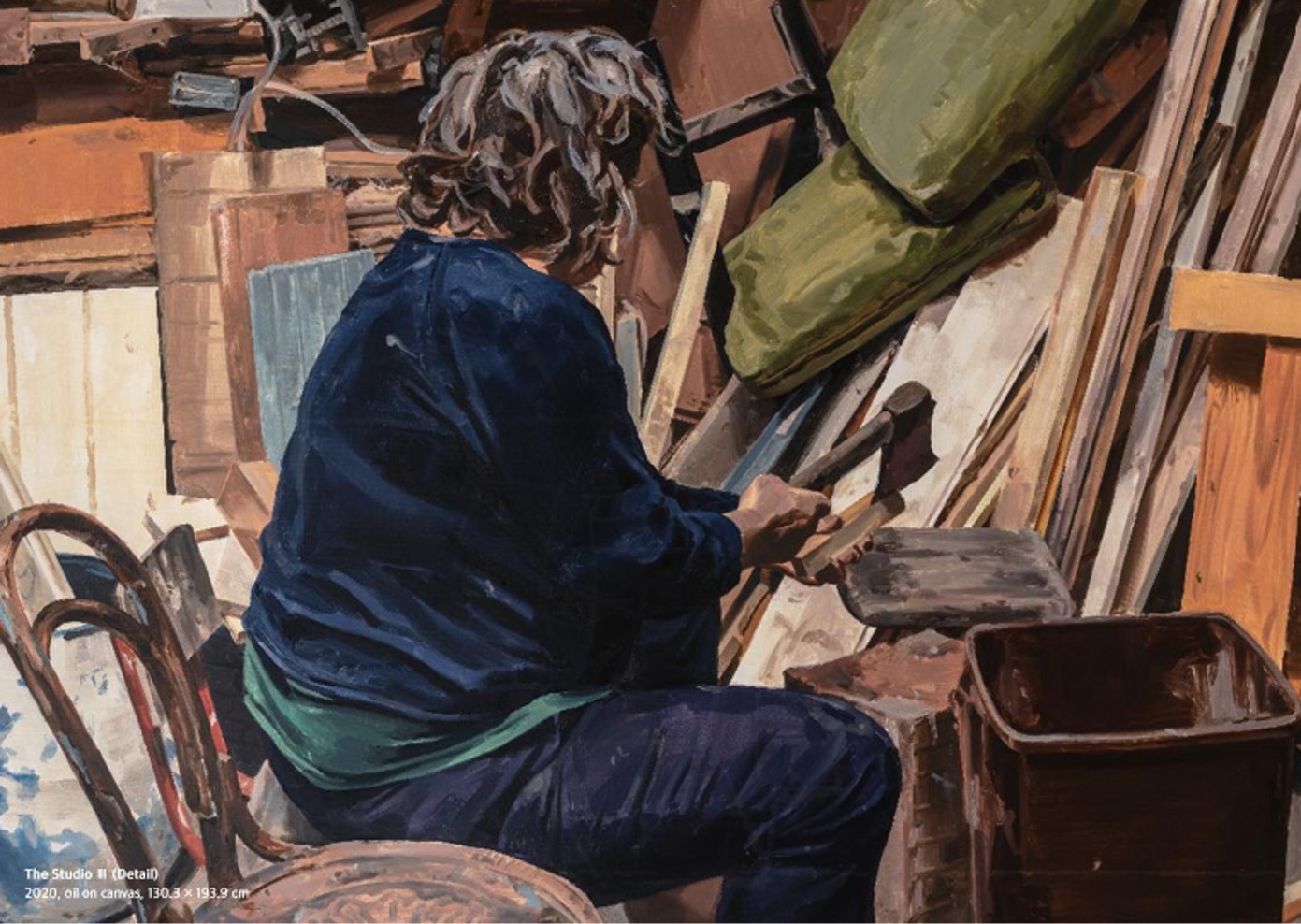
The paintings in my very first solo exhibition, in 2021, were inspired by a couple I met in Ireland and the place where they worked. The exhibition was held in my hometown, Cheongju, in a hundred-year-old traditional Korean house called a hanok. Since the paintings focused on woodworking, I thought they would fit perfectly with the space’s old wooden structure.
Before talking more about this exhibition and these paintings, though, I want to go back a little and tell you what was happening in my life at the time.
Back in 2019, around the time I finished graduate school, I completely lost my motivation to paint. I felt that everything I had made up to that point was meaningless. I was painting people based on footage I found on the internet, but the more I did it, the more I kept asking myself, “Why am I doing this? What’s the point?” I was working out of habit, without really knowing why.
I felt I needed a big change, not just in my art but in my life. I decided to leave Korea and move somewhere where I didn’t know anyone, almost as if I were running away.
While I was in Ireland, my only hobby was taking photos with a disposable camera. I had no particular plans for these photos, and I was simply documenting my life, thinking that maybe they would become my art someday.
About a year later, after returning to Korea, I started looking back at those photos and turning them into paintings.
In these early works, I didn’t arrange anything for the camera. I didn’t tell people how to pose or plan the background or their facial expressions. As a result, these paintings are quite different from my more recent work, in which I carefully plan the scene and direct the model.
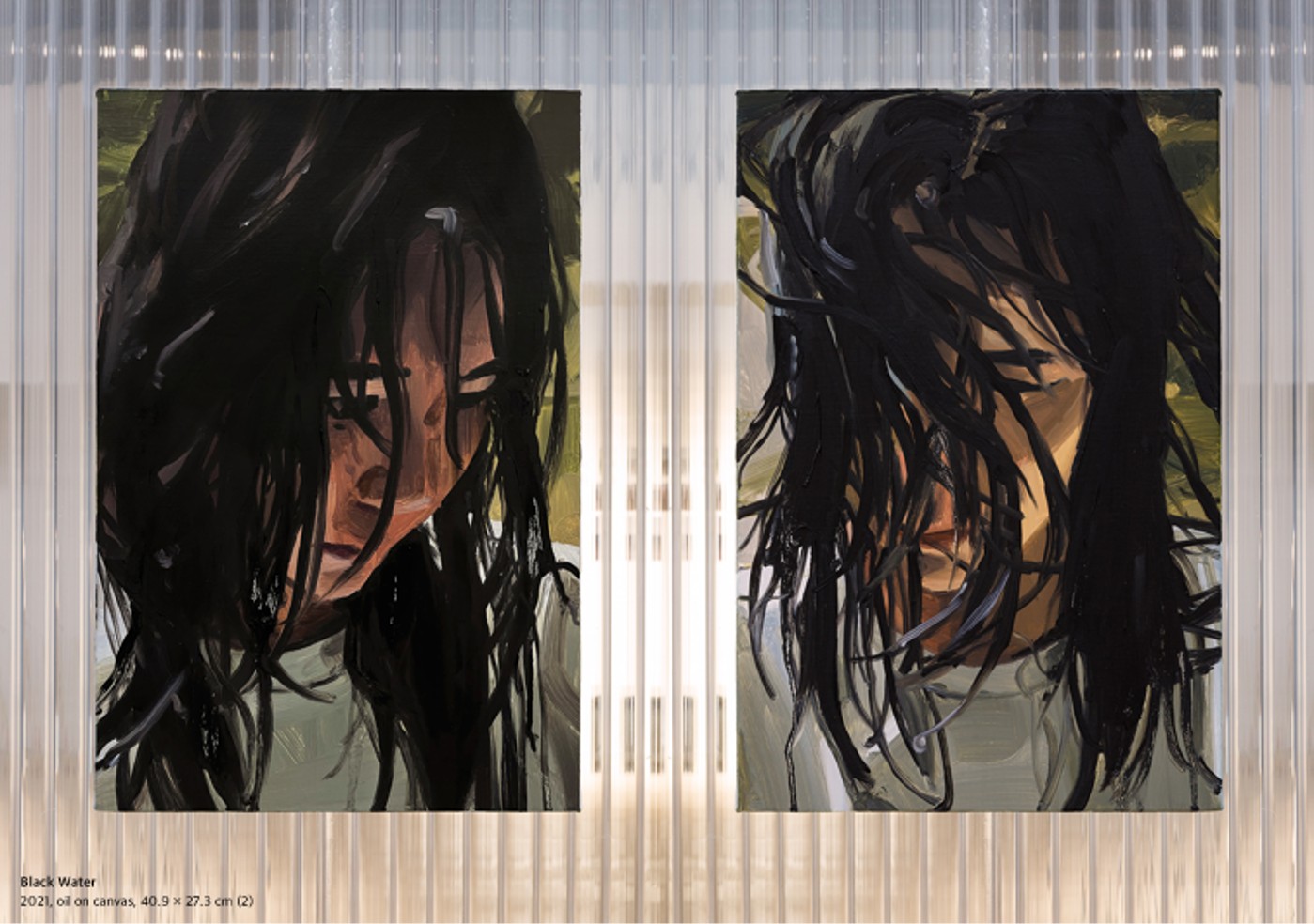
For my next project, Dripping Wet, I tried staging a scene for the first time. While my previous paintings were based on casual snapshots of everyday life, from this point on, I began taking photos with a specific plan in mind.
This was the beginning of the process I still use today: setting up a scene, taking a photograph, and then turning it into a painting.
My model at the time was my younger sister. Rather than simply painting her physical appearance, I wanted to capture something I sensed in her, something I found difficult to describe in words. I used water as a visual metaphor for that feeling.
Water has been a recurring theme in my work ever since. I just love how it changes the mood and the way things flow.
For this series, I planned the figures, background, and gestures in advance. The process was still pretty simple compared to how I work today, but this was where my current way of working began to take shape.
At the time, I didn’t use a fancy camera, just my old digital camera and my iPhone. I was especially interested in the iPhone’s Live Photo feature, which captures about 1.5 seconds of movement. When I went through the frames one by one, I could see all these tiny changes in the body, gestures, and light.
I took those frames and spread them across multiple canvases to show the full movement. This multi-canvas sequence format has since become one of the key formats in my painting practice.
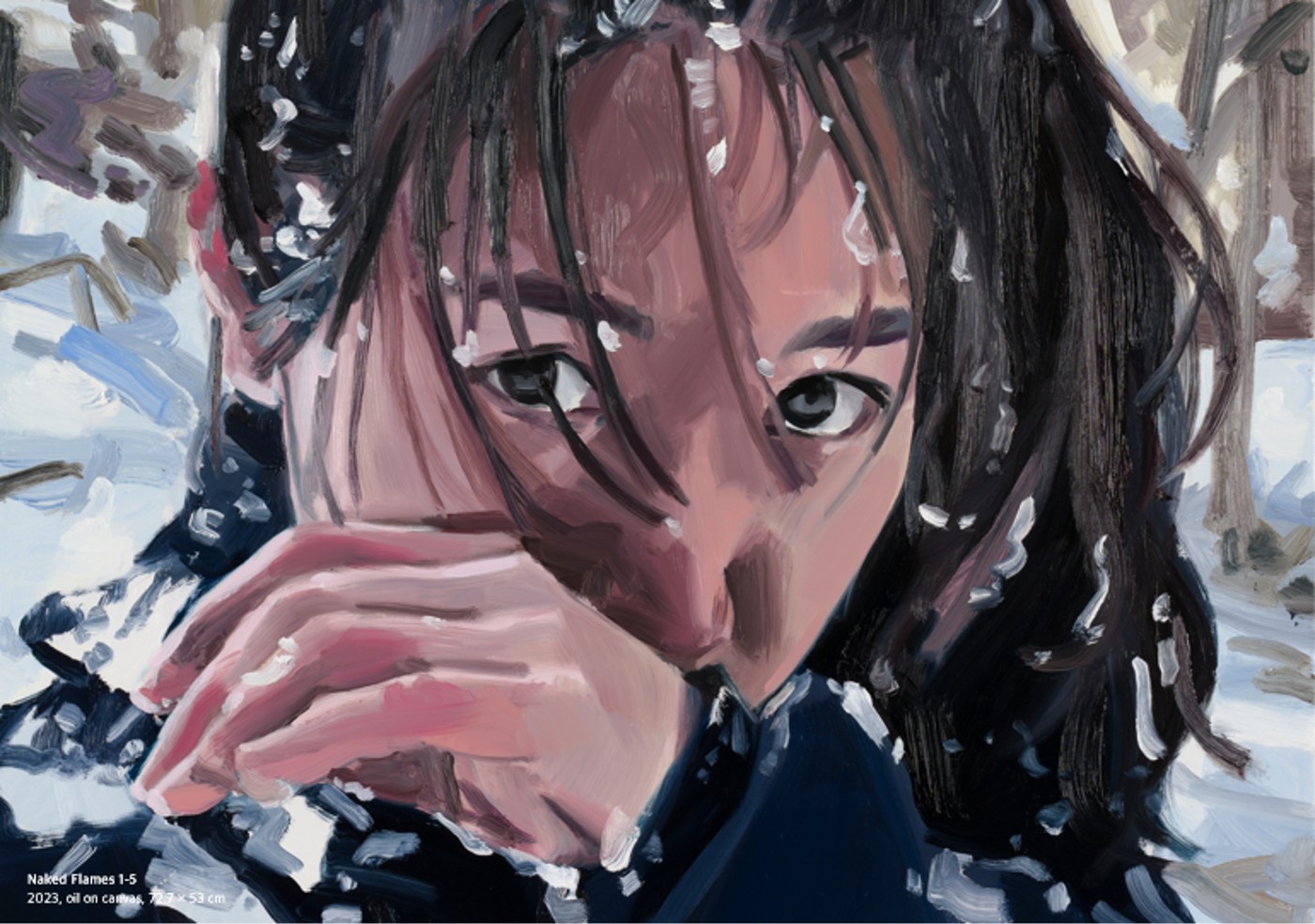
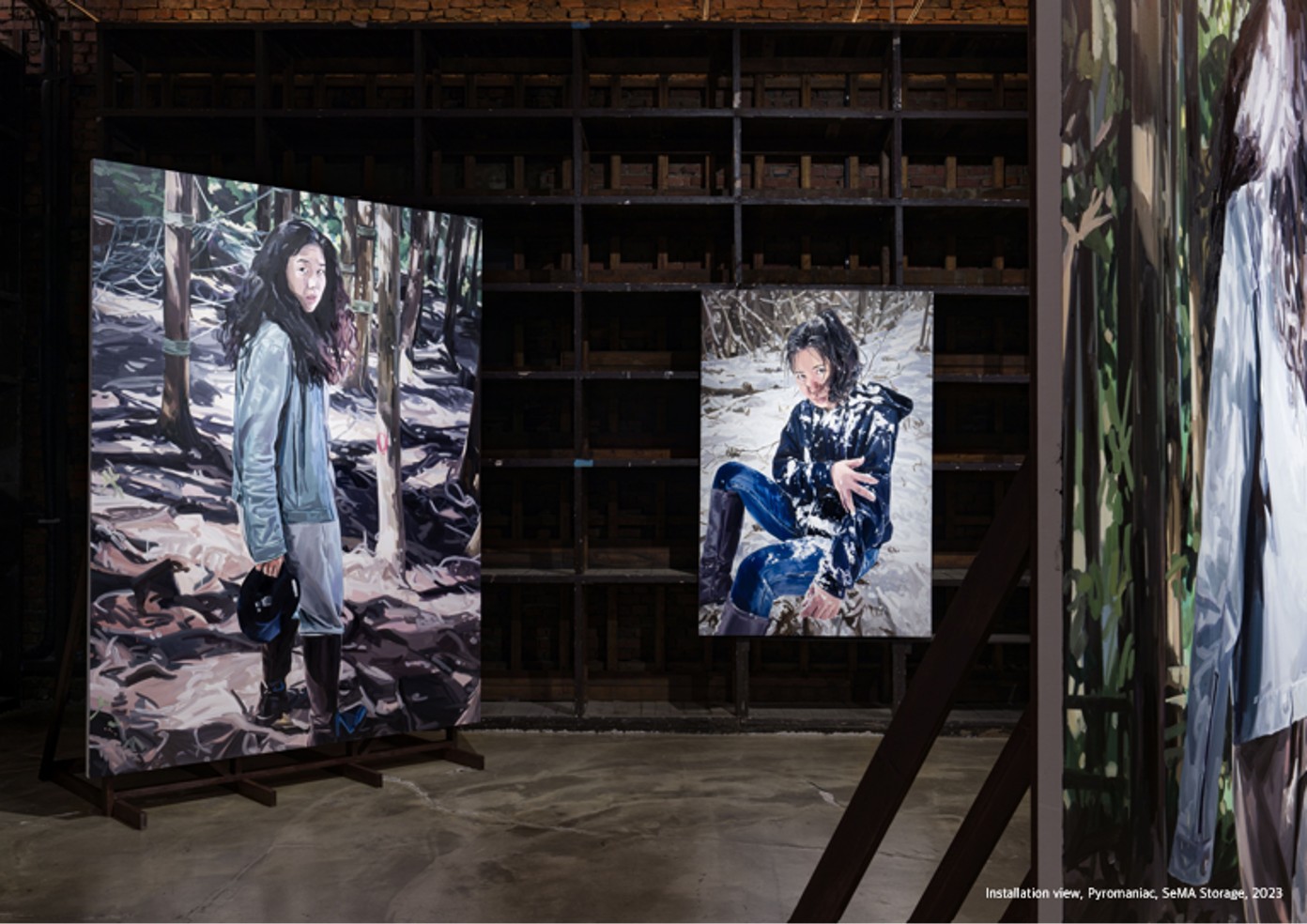
With Pyromaniac, I started creating fictional characters.
People often ask me how I choose my models. At the time, I needed a certain level of closeness and understanding because it gave me more room to imagine and build stories around them. Of course, that doesn’t mean everyone I knew could become a model for my paintings. I do have my own criteria, although they’re hard to explain.
I used real people as a starting point and built different characters from there.
For this project, I worked with my younger sister and one of my close friends, both of whom were incredibly supportive. I created fictional characters from small details I knew about them, such as their gestures, expressions, and personalities.
I then photographed them in different scenes at the same location, sometimes visiting during the day and at night, or in different seasons and weather conditions.
One thing I especially wanted to paint in this series was heavy snowfall. I remember one day I was at home with my sister when I looked outside and saw the snow pouring down. I shouted, “This is it!” We went straight outside and took photos.
The exhibition title I originally had in mind was The Shaman, the Hunter, and the Walker. But rather than assigning each model a specific role, I wanted viewers to imagine for themselves who these people were and what kind of situation they were in.
The final title, Pyromaniac, was suggested by the curator I worked with. She told me that the white snow in the paintings looked like the white ash left behind after a fire.
A pyromaniac is someone obsessed with setting fires, and I used this idea as a metaphor for my painting practice. I took certain aspects of real people as little sparks and let them grow into bigger, fictional characters, like a large fire.
The exhibition took place at SeMA Storage, a space run by the Seoul Museum of Art. It’s definitely not a typical white-cube space. It has a high ceiling, natural light, deep shadows, and lots of wooden textures. Because of these features, the space doesn’t feel completely enclosed, and the inside and outside seem to blend together.
Since my paintings were set in the forest, SeMA Storage felt like an extension of the forest itself.
This was a turning point in my practice, when I became more interested in narrative and world-building.
At the time, my studio was near the Han River, right next to a small wetland area. Of course, it wasn’t as vast as the swamps in Louisiana, but it really sparked my curiosity and led me to explore myths and folktales about swamps from around the world.
Swamps are wet and dark, and almost impossible to escape once you step inside. People have created all kinds of eerie and terrifying stories about these dangerous, mysterious places.
What I found really interesting was that so many of these mythical creatures were female. Some kidnapped children because they had died unmarried, while others abused men and tickled them to death.
These creatures also looked very different from one another. Some were incredibly beautiful, like goddesses, while others had twisted limbs and hairy bodies.
I wanted to bring the strange power and mystery of these beings into a completely different setting. I wondered: What if they existed right in the middle of Seoul? What would they look like? What kind of situations would they find themselves in, and what secrets would they have?
To bring this world onto my canvases, I spent a lot of time on pre-production. I handled everything, from casting models and finding locations to preparing costumes and props, shooting, and editing.
Basically, I was a casting director, location scout, stylist, photographer, and literary researcher all at once.
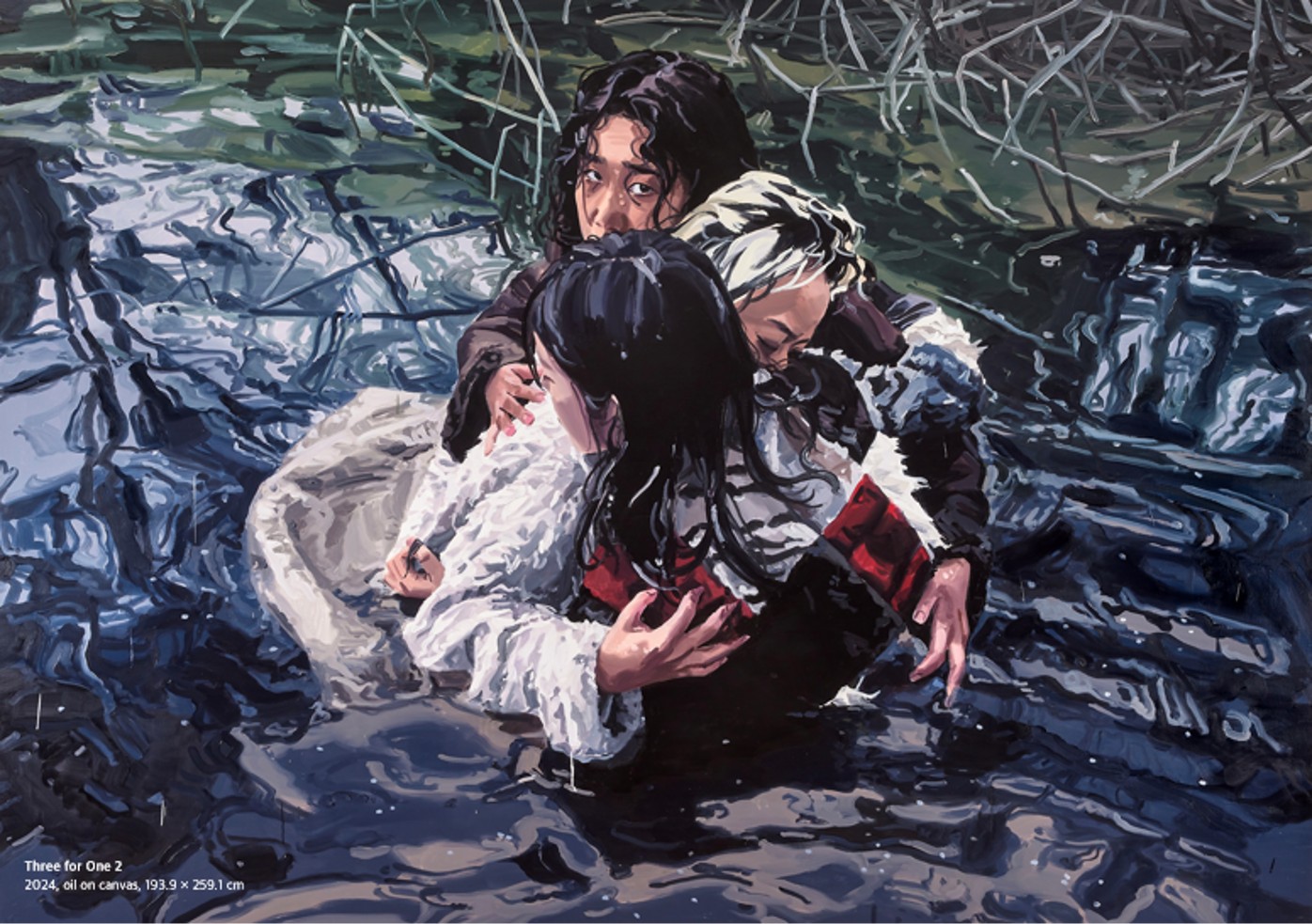
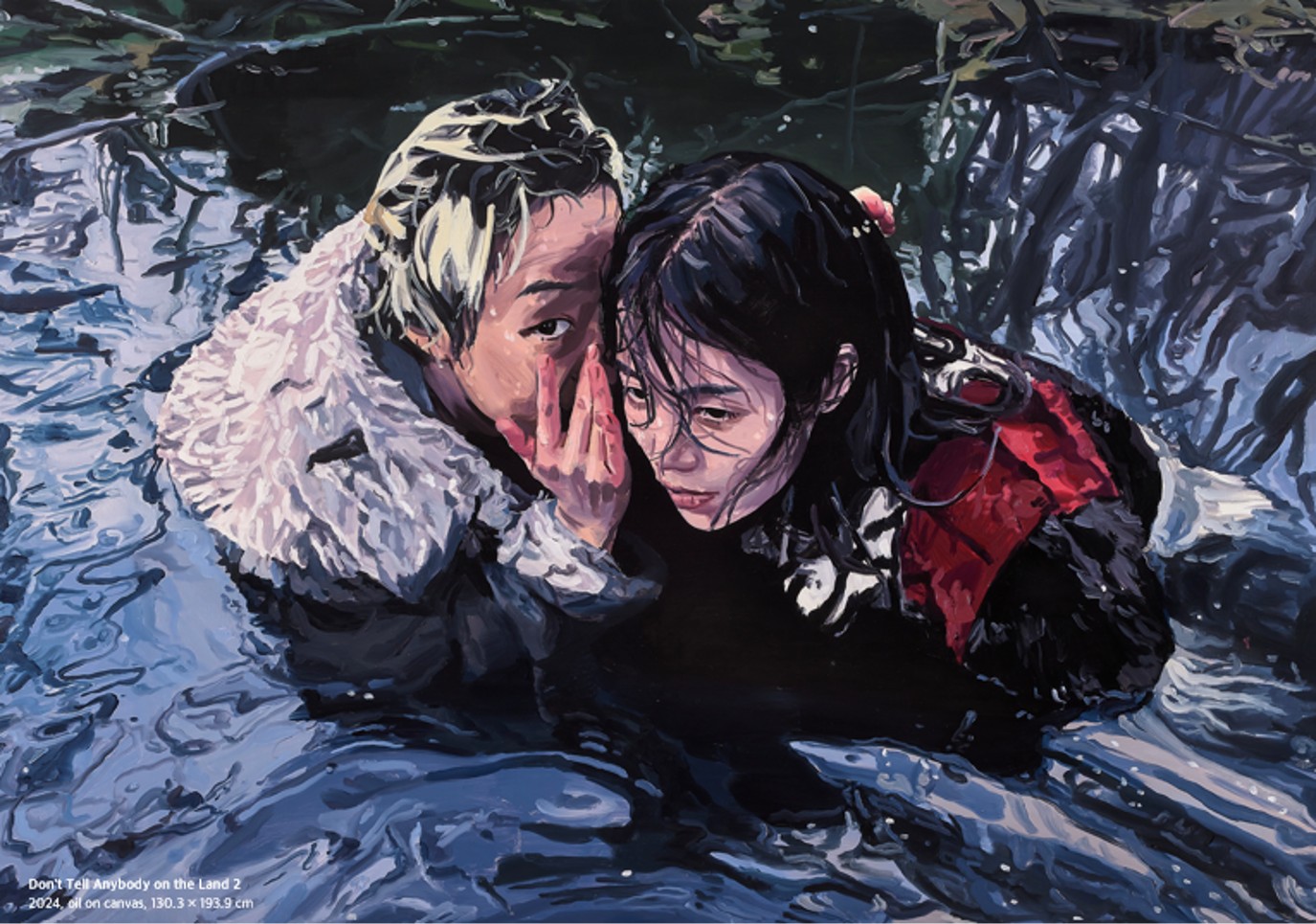
We were shooting in the middle of winter, and the model had to go completely underwater in freezing weather, so each session had to be really quick.
I visited the same spot dozens of times with different models to gather enough photographic references. I also started bringing multiple people together on a single canvas to build more detailed stories around them.
Some people told me that the three women in this painting looked like North Koreans trying to escape across the river. I had never thought of it that way, but I really love hearing how people come up with their own stories. I’m always curious about what people think, so I usually ask visitors to my exhibitions to choose their favorite and least favorite paintings and tell me why.
This exhibition took place at Foundry Seoul. Since it’s a huge gallery, I had complete freedom to work on a large scale. I painted a mural on an eight-meter-high wall, hung a heavy black curtain, and covered the floor with a thick, high-pile carpet. I wanted the entire space to feel like a swamp, a deep and mysterious wetland.
I wanted people to feel as though they were actually stepping into the painting, into the wetland itself.
One thing I love about painting is that it’s basically a solitary job. Unlike making a movie, which involves a big crew, painting usually means that it’s just me alone in the studio, standing in front of a canvas.
But for my Two Serpents project, I wanted to step outside my comfort zone and shake things up. I tried a lot of new things: casting a model I didn’t know personally, collaborating with a professional photographer, producing an original soundtrack, and experimenting with a new painting technique.
First, I changed the way I cast my models.
Until then, personal connection had been everything to me. I didn’t really care whether someone was conventionally pretty or good at acting. What mattered was our personal history and connection, which helped me build a character.
But this time, I wanted to explore more complex questions.
I often say that I want to paint large, monumental figures. These figures have always been women, and they’ve made me wonder what actually defines the category of woman and what femininity means in my work.
These questions led me to explore places where opposites meet.
For example, I worked with a transgender woman as a model, placing her in a world where the boundaries between nature and the supernatural, male and female, and the present and the future all blur together.
We shot on Ganghwa Island, where the tides are constantly coming in and going out. I also chose this location because the red-colored mudflats create such a dreamlike, mythical landscape.
Before this series, I took all my photographs myself using my iPhone. It was super convenient, but there were also technical limitations, especially when shooting at night without professional lighting.
I wanted to push those limits, so I put together a team with a professional photographer and an assistant to plan everything much more carefully from the beginning.
I was also thinking about the trance-like state of ancient oracles. To bring that energy into the space, I collaborated with an electronic musician to produce an original soundtrack for the exhibition.
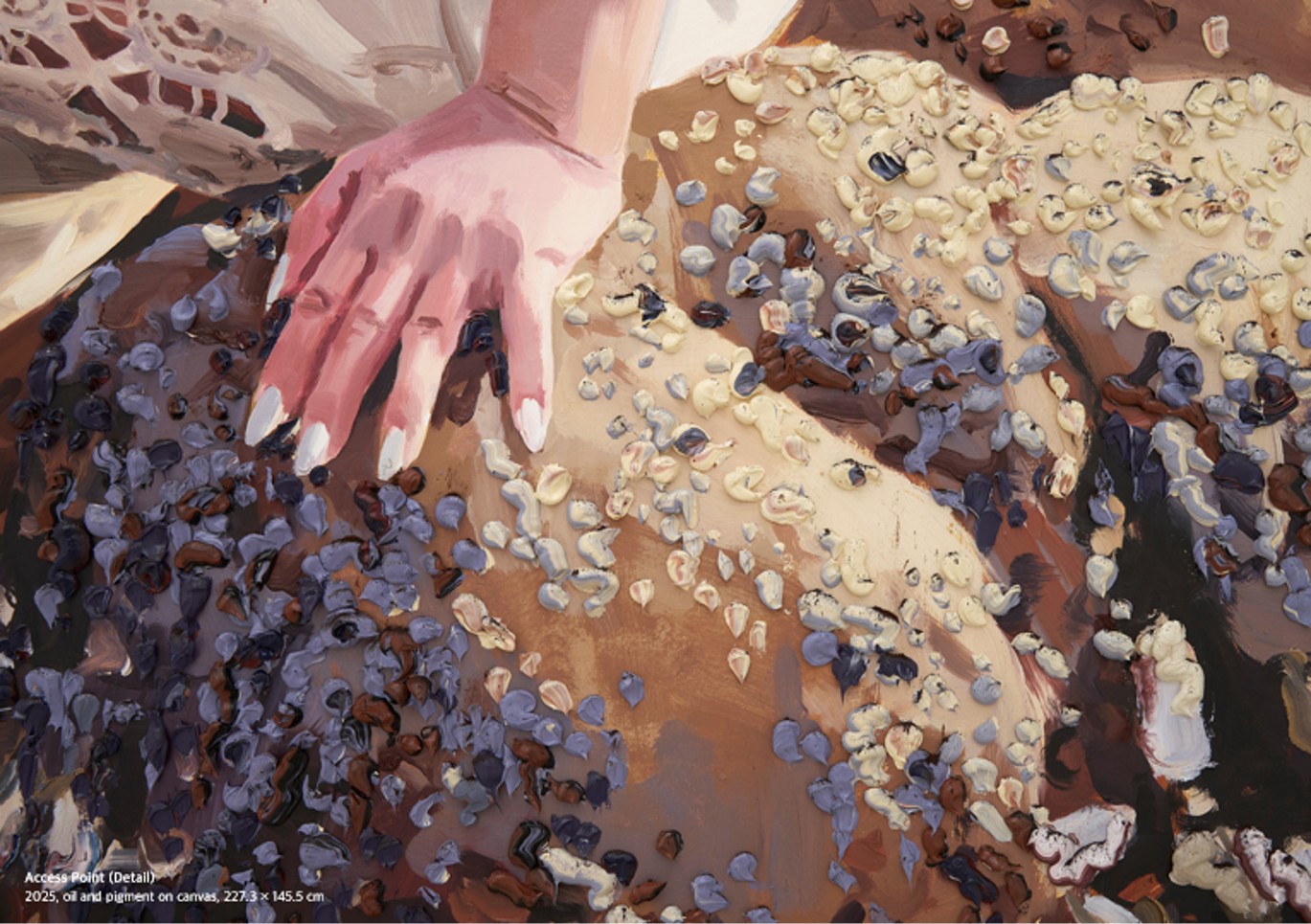
I also tried some new painting techniques. For example, the rocks in the painting are covered in barnacles. To create their bumpy, rough texture, instead of using regular brushes, I squeezed heavy-body oil paint directly onto the canvas using a piping bag. I used so much paint for this! I think most of my budget went straight into buying oil paint.
Finally, one more thing before I wrap up: I’m currently doing a residency at Goyang. We’re having an open-studio event in the first week of November, so you’ll be able to see the actual paintings I showed you today in person.
If you have time, please feel free to visit!
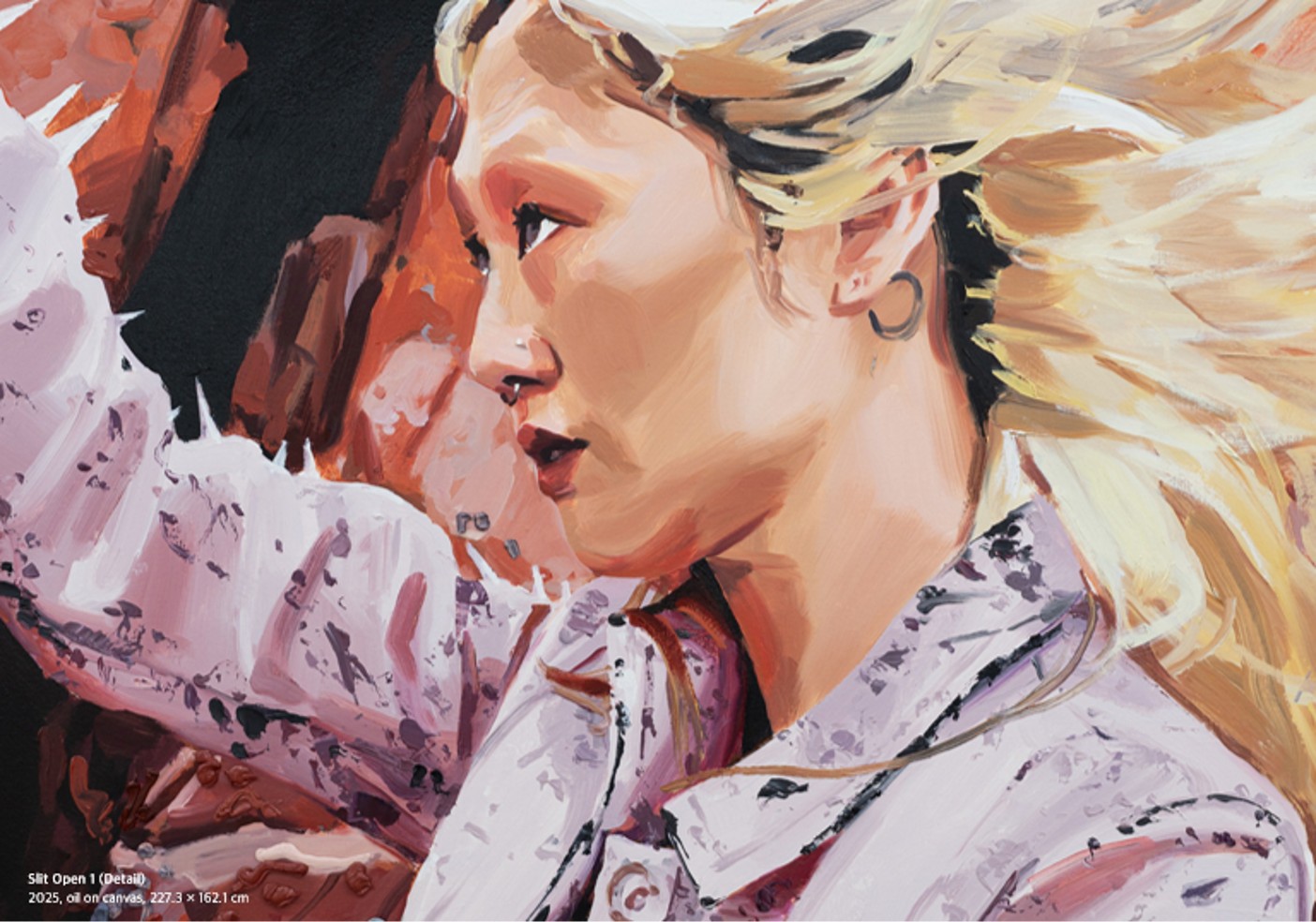
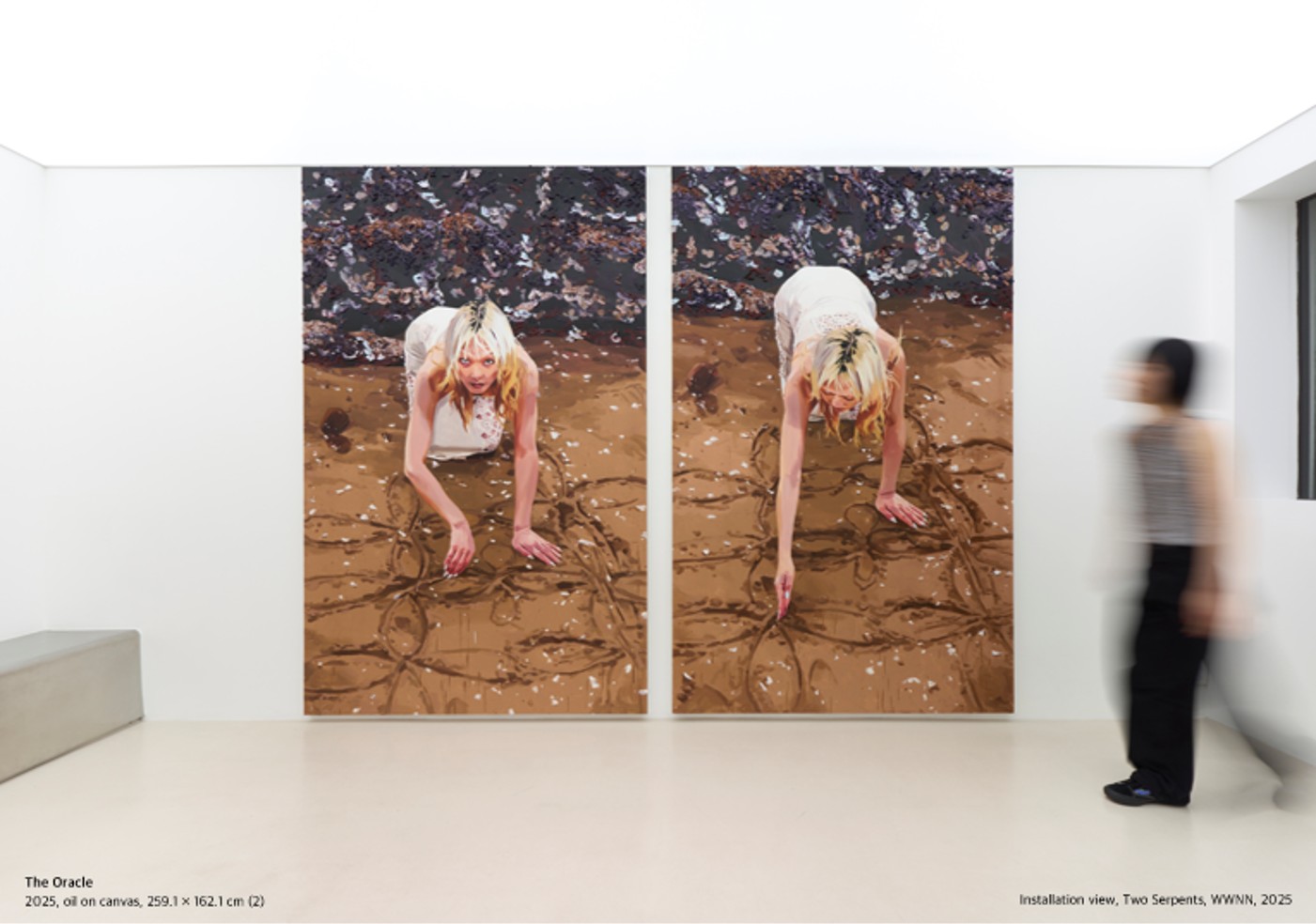
"I often say that I want to paint large, monumental figures. My figures are usually women, and they’ve made me wonder what actually defines the category of woman and what femininity means in my work. These questions have led me to explore places where opposites meet, where the boundaries between nature and the supernatural, male and female, and the present and the future begin to blur." - Miryu Yoon
All the pictures from The Talk's presentation are courtesy of the artist.
Thanks to: